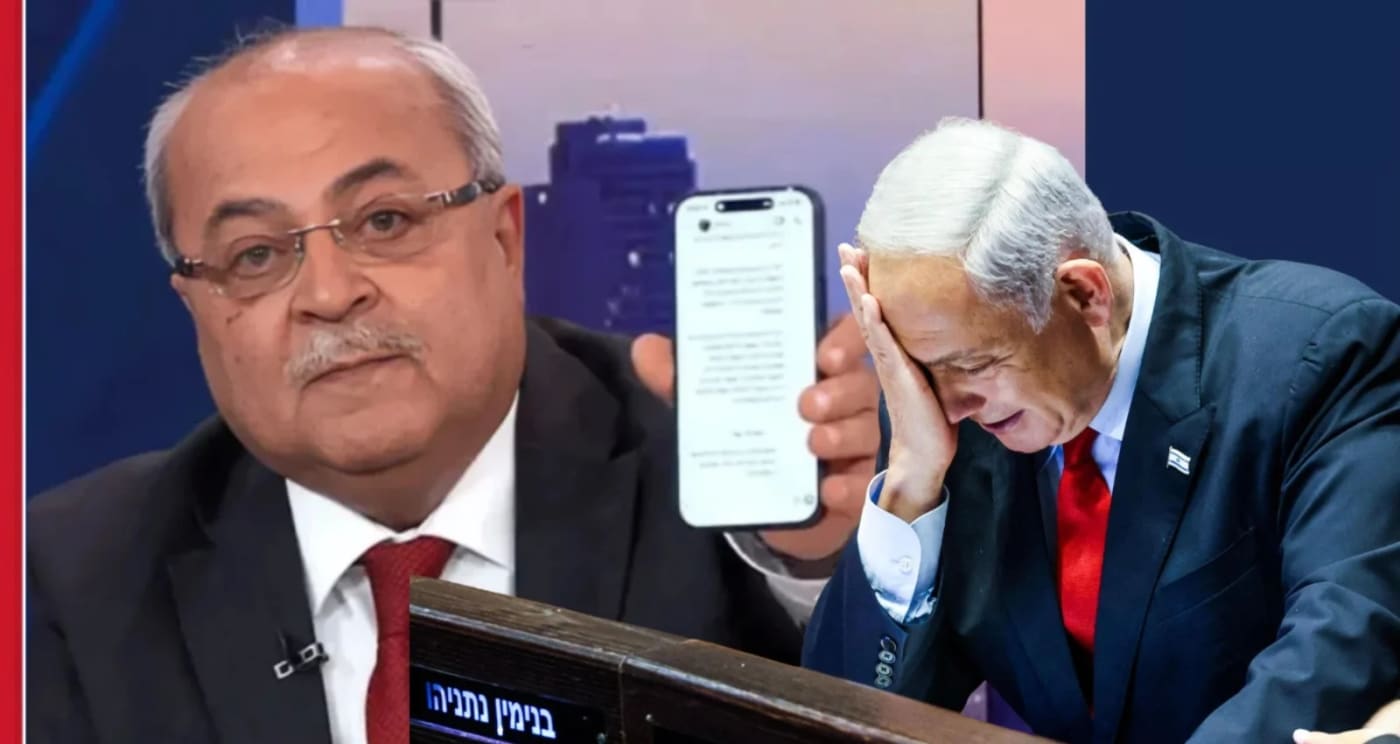

Arab Lawmaker Ahmed Tibi Exposes Alleged Secret Communications by Netanyahu,Claims Israeli PM Sought Arab Support to Block Gadi Eisenkot-Led Government
Jerusalem, Israel | November 17, 2026 | The Global Journal
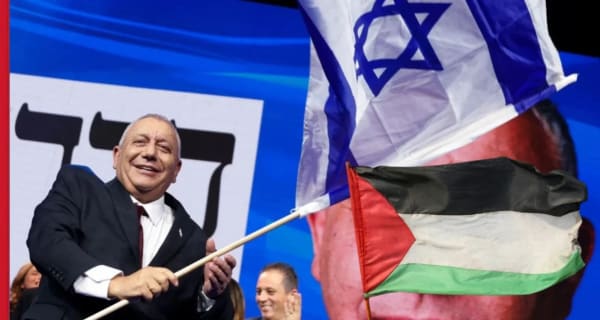
Israeli Prime Minister Benjamin Netanyahu has been accused of secretly reaching out to Arab political parties in an attempt to prevent the formation of a government led by opposition figure Gadi Eisenkot. Ahmed Tibi, Deputy Speaker of Israel’s Knesset and a lawmaker from the Joint List, has made the explosive allegation, claiming that Netanyahu privately sought support from Arab lawmakers despite publicly opposing political alliances or cooperation with Arab parties.
In an interview with Israeli television channel Channel 12 on Friday, Tibi presented private messages allegedly sent to him by Natan Eshel, a longtime close associate of Netanyahu. According to Tibi, Eshel contacted him multiple times—one week before the October 27 election, immediately after voting ended, and again following the announcement of the final results. During the interview, Tibi held up his mobile phone to display some of the messages, although their contents were not clearly readable in the broadcast footage due to low resolution.
Tibi argued that the messages demonstrate a contradiction between Netanyahu’s public opposition to cooperation with Arab political parties and the alleged behind-the-scenes efforts by his close associates to secure their support for political purposes.
Tibi said he normally refrains from making private conversations public. However, he felt compelled to disclose the communications following Netanyahu’s speech in the newly elected Knesset on November 10.
In that address, Netanyahu called for the formation of a national unity government and warned against establishing a coalition dependent on the Ra’am or Joint List parties. He also accused Arab lawmakers of supporting terrorism, seeking the destruction of Israel, and being involved in alleged election fraud. Opposition leader Gadi Eisenkot described Netanyahu’s remarks as hateful, while Arab political parties condemned them as racist and inflammatory.
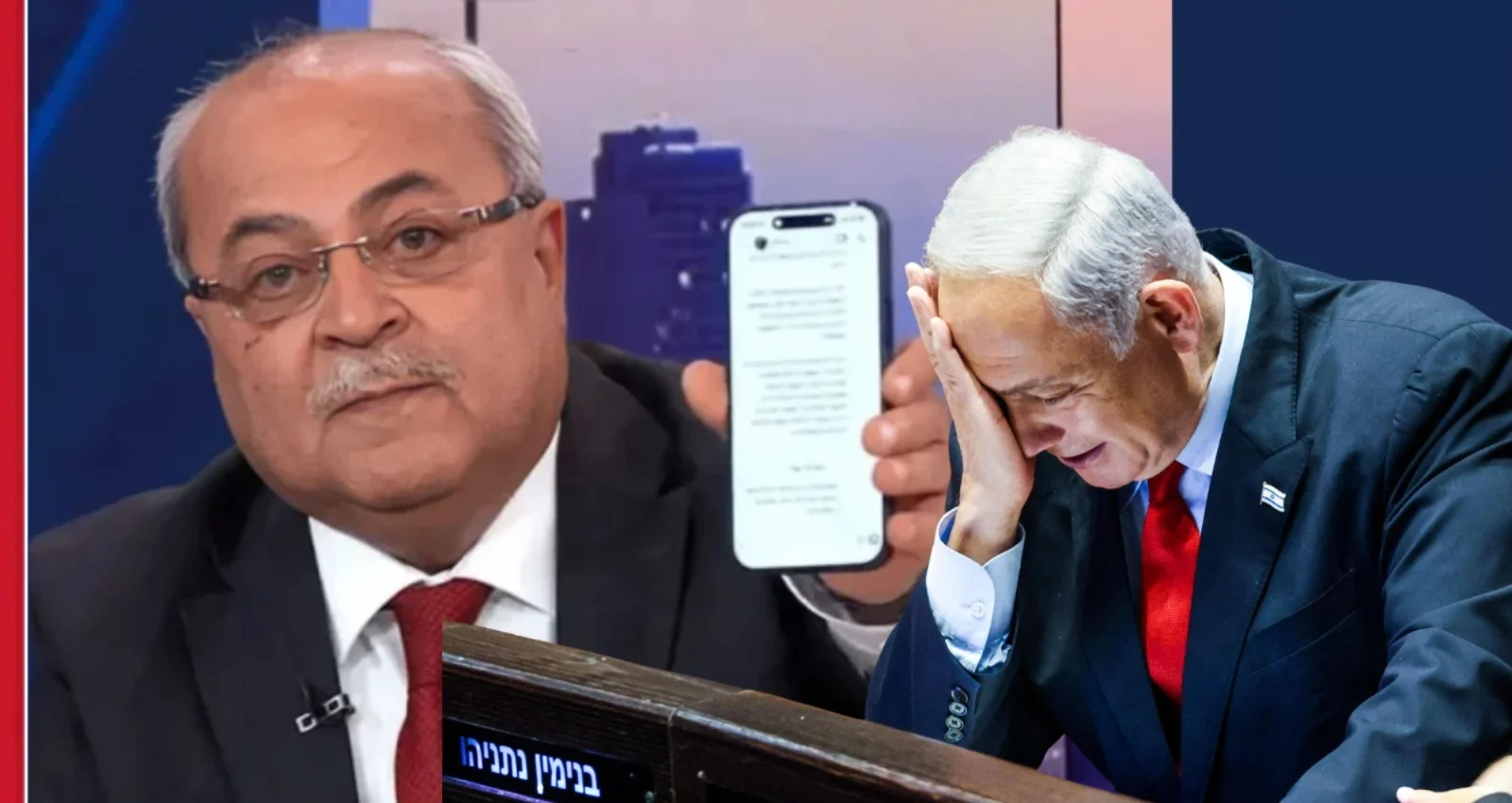
Accusing Netanyahu of hypocrisy, Tibi said Eshel had repeatedly contacted him before and after the election. He claimed that while Netanyahu publicly questioned the political legitimacy of Arab parties, his close associates were privately seeking their support.
Tibi further alleged that a minister in Netanyahu’s government contacted him earlier this week, urging him not to support a government led by Gadi Eisenkot. According to Tibi, the minister suggested that Israel should move toward another election instead. Tibi said he made it clear that the Joint List did not want another election but wanted to remove Netanyahu and far-right National Security Minister Itamar Ben-Gvir from power.
Tibi also accused Ben-Gvir of repeatedly inciting against Israel’s approximately two million Arab citizens. He alleged that Ben-Gvir was escalating tensions against the Arab community with the assistance of Shin Bet chief David Zini.
However, Netanyahu’s ruling Likud Party has strongly rejected Tibi’s allegations, describing them as entirely false. In a response to Channel 12, the party accused Arab political parties of spreading falsehoods to establish their legitimacy. Likud maintained that it does not cooperate with parties that disrespect Israel’s national anthem or harm the Israel Defense Forces (IDF).
Tibi also rejected Netanyahu’s allegations of election fraud involving Arab political parties. He argued that the accusations were part of an attempt to politically marginalize Arab leadership and portray the country’s approximately two million Arab citizens as illegitimate participants in the political system.
Tibi said election officials had found no evidence of irregularities in the results. Attorney General Gali Baharav-Miara also reportedly stated that she had not received any information indicating that anything had occurred that could have influenced the election outcome.
Explaining the strong turnout among Arab voters in the recent election, Tibi said public anger over the outgoing government's policies, alleged repression, and inflammatory rhetoric had encouraged Arab citizens to turn out in large numbers. He identified rising violent crime in Arab communities, statements by far-right politicians such as Ben-Gvir and Bezalel Smotrich, and growing concerns over the community's future as major factors behind the increased political participation.
Earlier, another Channel 12 report stated that Natan Eshel had also repeatedly contacted Ra’am Party leader Mansour Abbas before, during, and after the election. According to the report, Eshel urged Abbas not to help Eisenkot form a government and not to support proposed legislation that would prevent a lawmaker facing corruption charges from being tasked with forming a government.
Abbas reportedly said he wanted to wait for the election results before making a decision and subsequently stopped responding to Eshel's messages.
Meanwhile, Eshel has denied sending messages on Netanyahu’s behalf. He claimed that he had contacted several Arab political leaders out of personal curiosity, asking how they could justify supporting political parties that did not want to include them in their governing coalitions.
During the interview, Tibi also criticized Yisrael Beiteinu leader Avigdor Lieberman for refusing to engage with Arab political parties. Tibi recalled that Lieberman had previously served as finance minister with the support of Arab lawmakers in the former change government and had also secured the chairmanship of the Knesset Foreign Affairs and Defense Committee with their votes.
The allegations have added another layer of political controversy to Israel’s post-election coalition negotiations, highlighting the influence of Arab lawmakers and the competing positions of political parties over the formation of the next government. However, the authenticity and full contents of the disclosed messages, along with the conflicting accounts from the political figures involved, remain central to the ongoing dispute.