
633 Bodies Recovered After Devastating Flash Floods and Landslides on Nepal–Tibet Border, More Than 3,000 Remain Missing
Nepal–Tibet Border | August 29, 2026 | The Global Journal
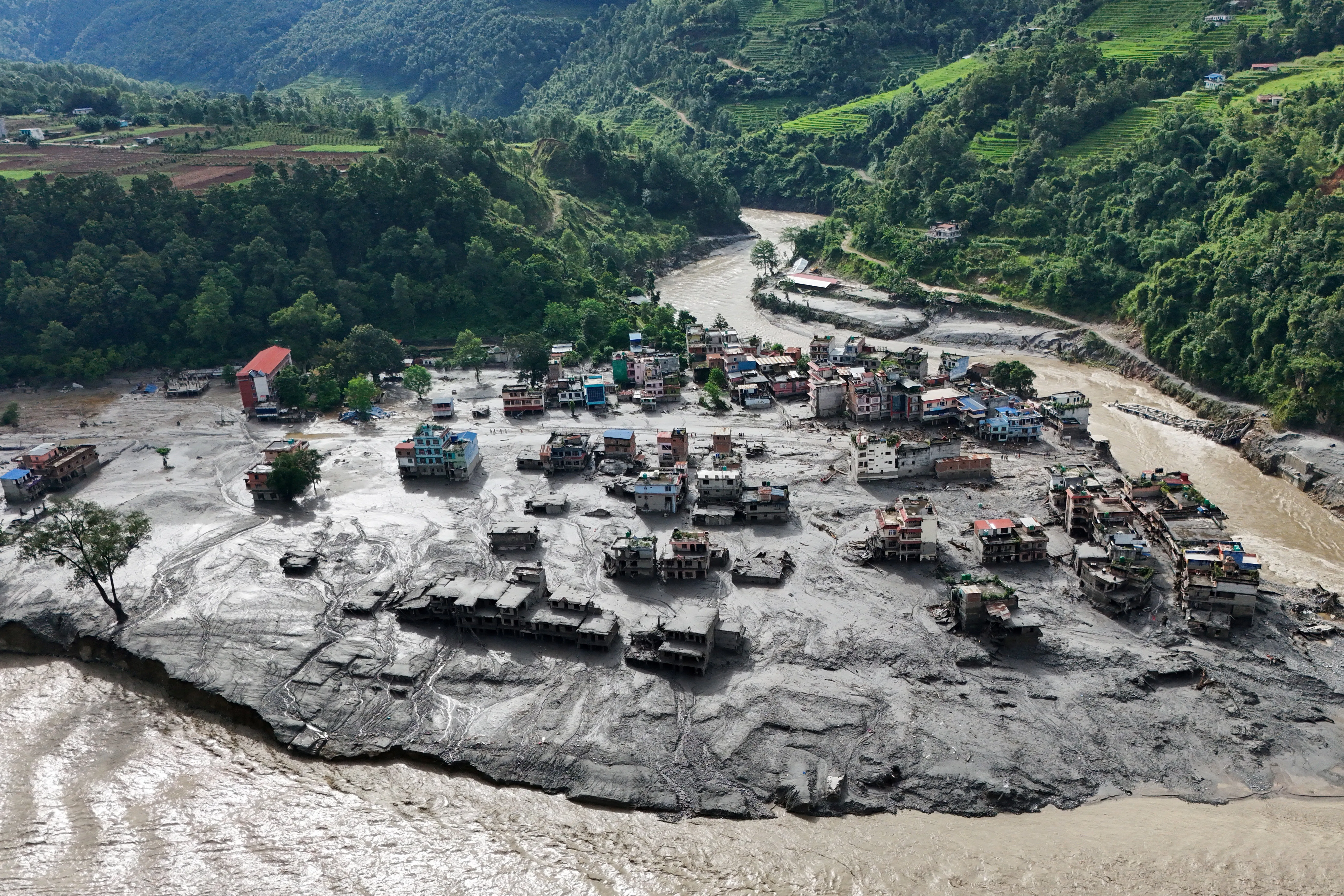
A devastating natural disaster continues to unfold across the Himalayan region following massive landslides and glacial collapse along the Nepal–Tibet border. According to the latest information, 633 bodies have been recovered, while more than 3,000 people remain missing across Nepal and Tibet.
Search and rescue teams from Nepal and China are continuing operations in mud, ice and debris in an effort to locate survivors.
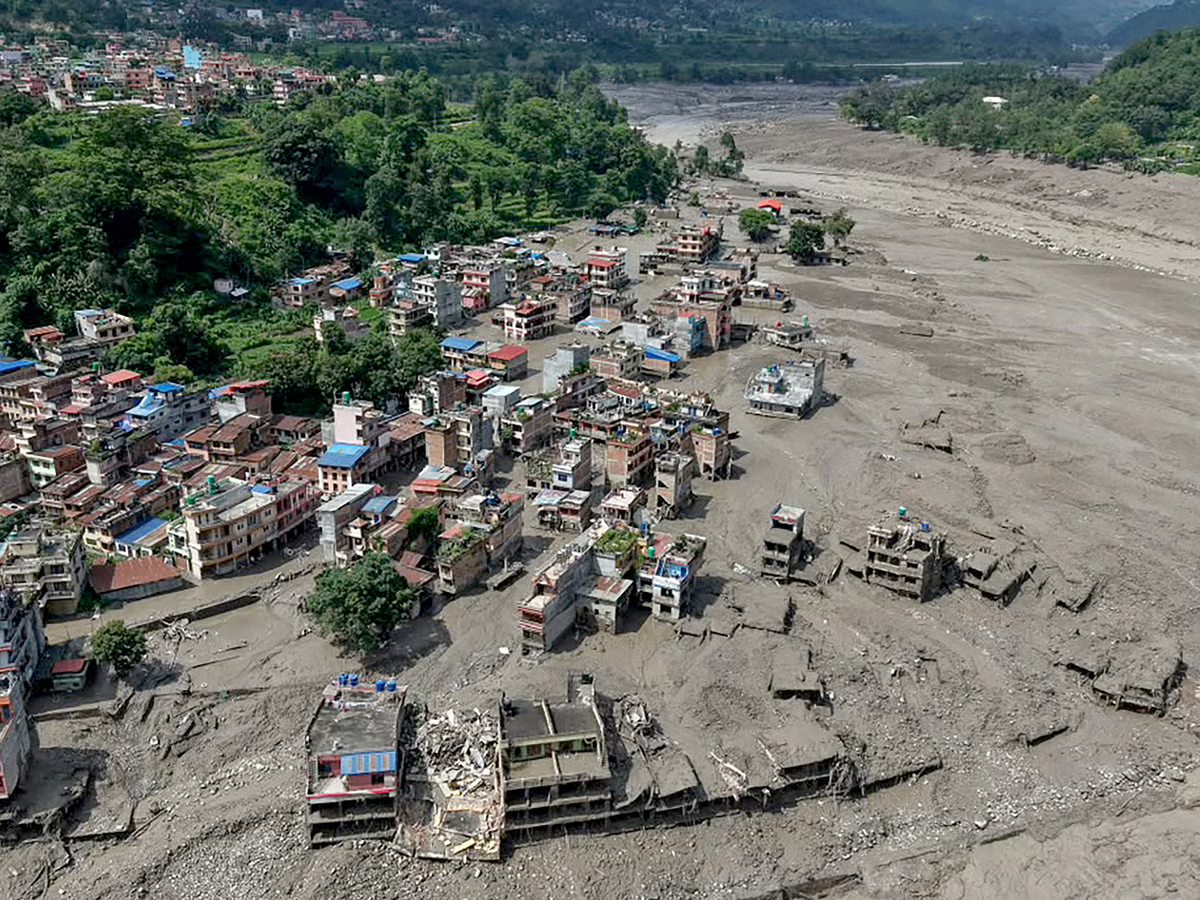
The disaster sent huge volumes of water, ice, mud and debris through mountain settlements and villages at extraordinary speed, causing widespread destruction to buildings, vehicles and critical infrastructure. Rescue officials have also warned that some bodies may have been carried downstream from Nepal into rivers in India.
Nepal’s disaster management authorities have added 933 hydropower workers to the missing-persons list. The list also includes tourists, trekkers and pilgrims who were traveling toward the sacred Mount Kailash in Tibet.
In Kathmandu, relatives of missing people have gathered at hospitals and temporary medical centers, while posters displaying photographs and names of missing persons have been placed at various locations.
Glacial Collapse Triggered Devastating Floods
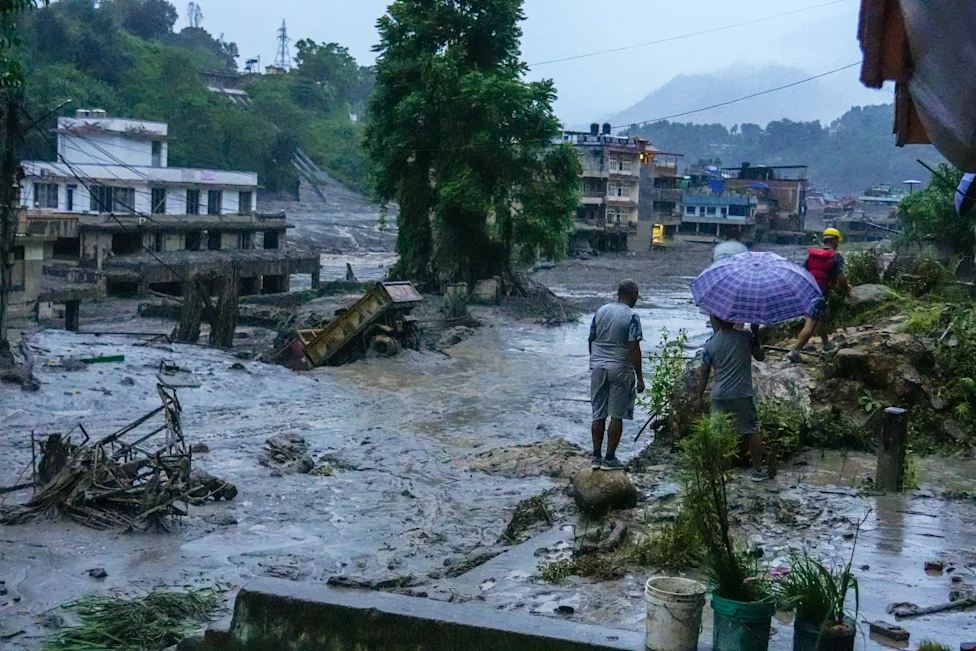
According to information from the U.S. Geological Survey (USGS), a glacial collapse triggered a massive flow of ice, water and debris, leading to the disaster.
The scale of the destruction has made it one of Nepal’s deadliest natural disasters since the 2015 earthquake.
The powerful flow of ice and mud also created large lakes in several locations, posing additional risks to rescue teams. After concerns that a water reservoir on the Tibetan side could breach, Nepalese police urged rescuers to move to safer locations.
In Gyirong, one of the worst-hit areas on the Chinese side of Tibet, rescue operations were temporarily suspended because of the threat of further flooding. Authorities later said conditions had improved and operations resumed.
Chinese state broadcaster CCTV reported that water from a lake formed by massive debris accumulation had threatened areas where rescue teams were working. The water level later declined, allowing rescue efforts to proceed in an orderly manner.
Chinese President Xi Jinping chaired a meeting on the rescue response and ordered intensified efforts to locate missing people while supporting Nepal’s emergency operations.
More Than 100 People Trapped at Hydropower Project
Food and water shortages have emerged in some of the worst-affected areas. The Nepal Army has located people trapped inside a tunnel at the Trishuli-3A hydropower project and is searching for an access point to reach them.
Army spokesperson Raja Ram Basnet said around 350 workers and local residents had been evacuated to safety, while more than 100 people could still be trapped at the site.
Two helicopters were dispatched to assist in the rescue, but authorities said locating the tunnel entrance has proved extremely difficult.
Survivors from other hydropower projects described how rapidly the disaster unfolded. Worker Buddha Tamang survived because he was inside a tunnel when the flood struck. He said many senior officials working on the other side of the project were swept away by the powerful torrent.
Families Wait for News of Missing Relatives
Families continue to gather at temporary hospitals and shelters across Nepal in the hope of finding missing relatives.
One mother, Kula Priya, said the flood had taken everything from her and that she cared about nothing except getting her missing son back.
Nepal reported 579 deaths on Friday, while its disaster authority said 1,924 people, including 517 foreign nationals, remained missing or out of contact at that point.
Meanwhile, Indian authorities recovered seven bodies from rivers flowing downstream from Nepal and said they may have been victims of the floods.
Situation Remains Critical in Tibet
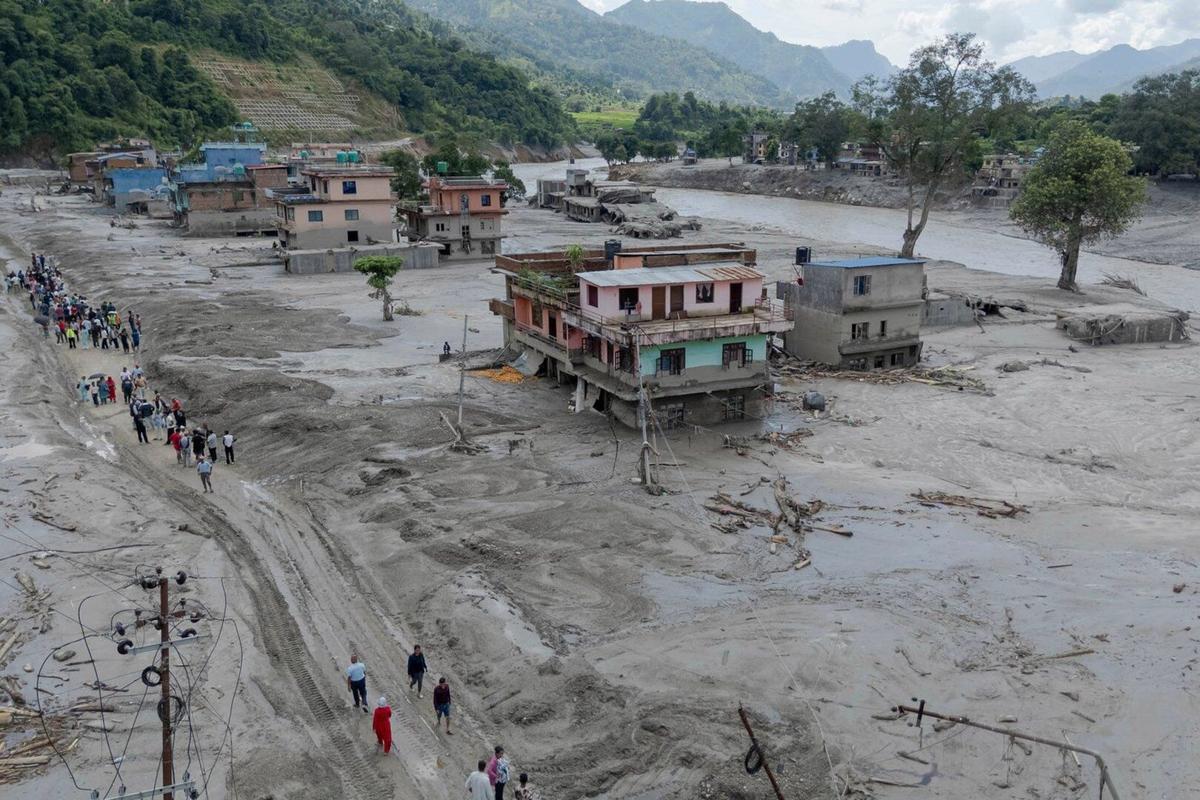
Information from the Tibetan side remains limited, with Chinese official sources providing most of the available details.
China’s state news agency Xinhua reported that seven people had died and 554 remained missing in Tibet.
Authorities also said 555 stranded tourists and 499 Chinese residents had been evacuated to safety.
Pilgrims Among Those Missing
The disaster has also affected pilgrims traveling toward Tibet’s Mount Kailash, with people from several countries reportedly among those missing.
Sivaranjani Muthunathan, 46, was traveling with 56 others toward the Chinese border when their bus became trapped. Initially, they believed the delay was caused by a traffic jam.
She later described seeing fog, smoke and a sudden torrent of debris engulfing the area. Vehicles around them were swept away or buried under mud. The group eventually escaped through the driver’s side of the bus and climbed toward higher ground.
Rescuers Race Against Time
Search and rescue operations remain extremely dangerous in remote parts of Nepal and Tibet following the catastrophic floods, landslides and glacial collapse.
Destroyed roads and bridges, the threat of additional flooding and difficult mountainous terrain continue to obstruct rescue teams.
The immediate priorities are to locate missing people, rescue those trapped and deliver food, water, medical supplies and emergency humanitarian assistance to affected communities.
Sources: Nepalese and Chinese authorities, Xinhua, CCTV and international media reports.