
Could Pakistan Army Chief Field Marshal Asim Munir Become the ‘Islamic NATO’ Commander? Turkey Says Military Chiefs Will Play a Key Role
Ankara | August 13, 2026 | The Global Journal
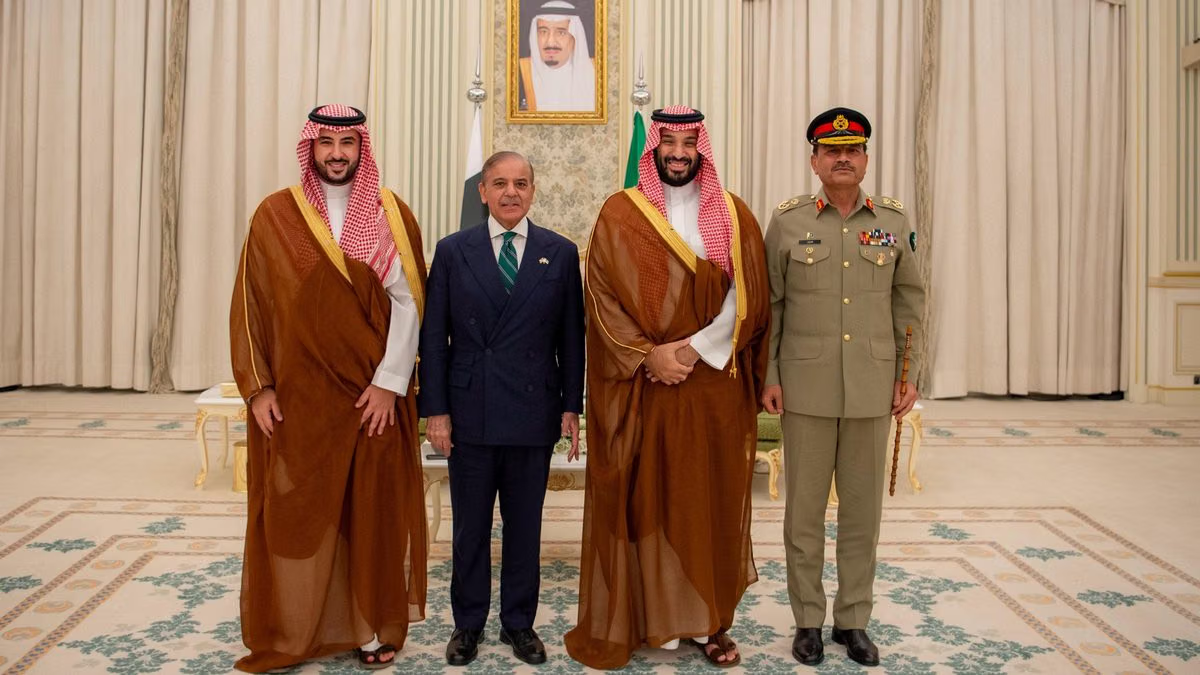
The potential military leadership structure of the Makkah Joint Defence Agreement between Pakistan, Saudi Arabia, and Türkiye has come under renewed attention. Türkiye’s Ministry of Defence has said that a coordinated political and military framework will be established involving the three countries’ defence ministers, foreign ministers, and military chiefs.
If implemented, the structure could give Pakistan’s Army Chief, Field Marshal Asim Munir, an important role. However, there has been no official announcement that he has been appointed, or will be appointed, as the commander of an “Islamic NATO.” The term “Islamic NATO” is primarily a political and analytical description; the agreement’s official name is the Makkah Joint Defence Agreement.
Comparison with NATO’s Article 5
Earlier, Turkish Foreign Minister Hakan Fidan said the mutual-defence provision of the Makkah agreement is technically comparable to NATO’s Article 5, under which an armed attack against one member is treated as an attack against all members.
Fidan also said that a ministerial committee would be established to oversee the agreement, along with a general secretariat in Saudi Arabia.
In its latest statement, Türkiye’s Ministry of Defence said that the three countries’ military chiefs would also be incorporated into this framework.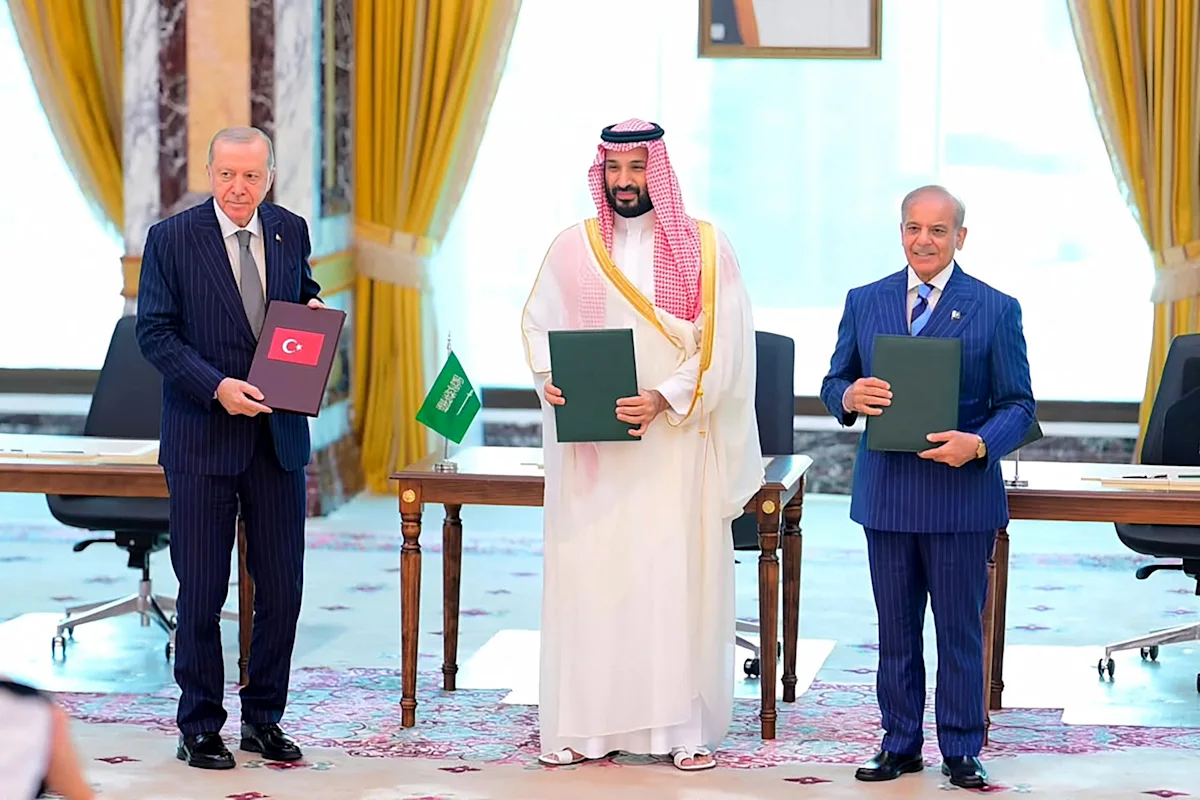
New Structure Involving Military Chiefs
Türkiye’s Ministry of Defence said the agreement will establish strategic political and military mechanisms involving the defence ministers, foreign ministers, and chiefs of staff or armed forces commanders.
One of the key objectives will be to ensure coordination among the three countries at the highest level, while placing defence relations on a more institutional and sustainable footing.
The three countries are also expected to conduct joint military exercises under the agreement.
How Appropriate Is the Term ‘Islamic NATO’?
Although defence cooperation among the three countries is expanding, experts caution that it would be premature to describe the arrangement as an equivalent of NATO.
Aishwaria Sonavane, head of the Pakistan programme at the Takshashila Institution, previously told Firstpost that the three countries do not yet have the institutional foundations required for NATO-style military interoperability.
Türkiye has extensive experience as a NATO member and has operated within the alliance for decades. Pakistan’s military system, meanwhile, relies heavily on Chinese technology, while Saudi Arabia remains significantly dependent on U.S. defence systems. Integrating the three countries’ military systems could therefore take considerable time.
However, according to Türkiye, the three countries intend to gradually improve interoperability through joint exercises and technological cooperation.
From Joint Exercises to Defence Technology
The agreement envisages joint exercises involving the land, naval, and air forces of the three countries. Air defence, drones, and other unmanned military systems are also expected to receive significant attention.
The countries also plan to expand cooperation in the defence industry, including joint development and production, technology cooperation, maintenance, and logistics support.
Türkiye has said that particular priority will be given to unmanned and autonomous systems, electronic warfare, and artificial intelligence (AI) capabilities.
How Important Could Asim Munir’s Role Become?
If the three countries’ military chiefs become part of the new governing structure, Pakistan Army Chief Field Marshal Asim Munir could have a direct role in the alliance’s strategic decision-making process.
However, no official decision has been publicly announced appointing him as the alliance’s sole commander.
Therefore, the possibility of Asim Munir becoming the commander of an “Islamic NATO” should currently be viewed as analytical speculation rather than a confirmed appointment.
The actual command structure, decision-making mechanisms, and operational framework will need to become clearer before it can be determined how closely the new security arrangement resembles NATO.
Overall, the Makkah Joint Defence Agreement represents an important step toward institutionalising defence cooperation between Pakistan, Saudi Arabia, and Türkiye. However, transforming it into a full-fledged “Islamic NATO” would require the three countries to make significant further progress in military coordination, technology, command structures, and interoperability.