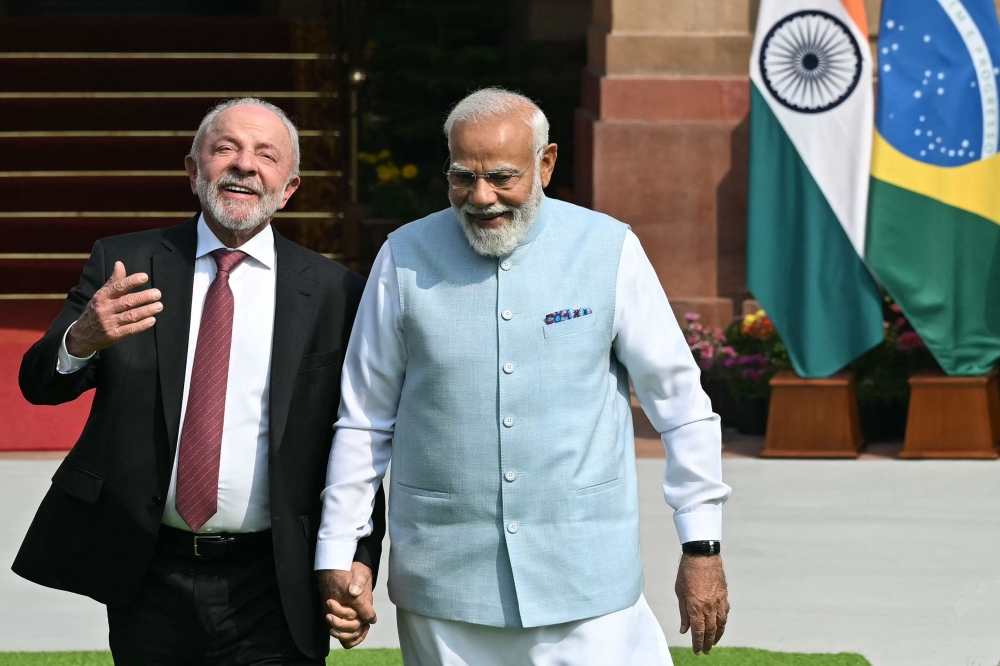

India-Brazil Sign Critical Minerals Deal, President Lula da Silva Meets Prime Minister Narendra Modi
New Delhi, India | 21 February 2026 | The Global Journal
India and Brazil have signed a historic agreement on critical minerals and rare earths, aimed at reducing India’s reliance on China. Indian Prime Minister Narendra Modi described the deal as a “major step towards building resilient supply chains.”
The agreement was finalized during a meeting between Prime Minister Modi and Brazilian President Luiz Inácio Lula da Silva in New Delhi on Saturday. After the meeting, Modi stated, “Cooperation on critical minerals and rare earths will help India develop a sustainable and stable supply chain.”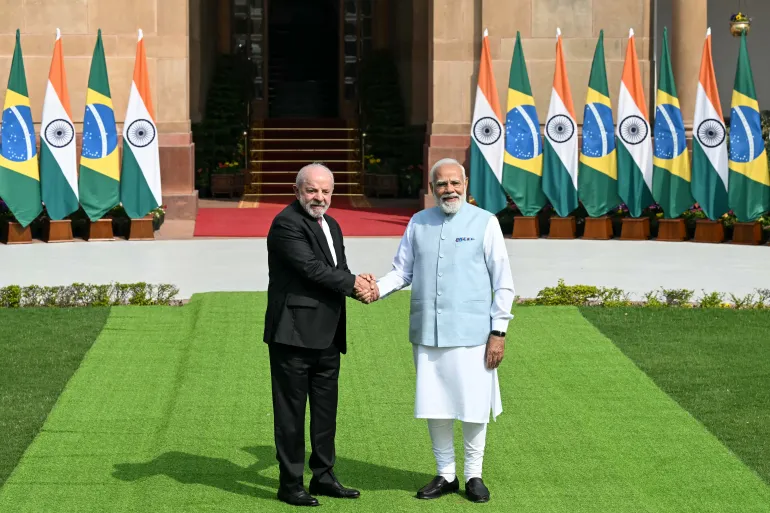
Currently, China dominates the mining and processing of rare earths and other critical minerals worldwide. Despite efforts by the United States to reduce China’s influence, Beijing has recently tightened its export controls.
Brazil holds the world’s second-largest reserves of critical minerals after China. These minerals are used in electric vehicles, solar panels, smartphones, jet engines, and guided missiles, among other high-tech industries.
President Lula said, “Increasing investment and cooperation in renewable energy and critical minerals is the core of this pioneering agreement.” While details of the deal have not yet been disclosed, India’s demand for iron ore has risen sharply due to rapid infrastructure expansion and industrial growth. Brazil is the world’s second-largest producer and exporter of iron ore after Australia.
Rishabh Jain, an expert at the New Delhi-based think tank Council on Energy, Environment and Water, told AFP, “India has already strengthened partnerships with the US, France, and the European Union to diversify its critical mineral supply. Global South alliances will play a key role in securing diverse resources and shaping emerging rules of global trade.”
The agreement marks a significant step for India in building strategic self-reliance and resilient supply chains in critical minerals.