
Consensus Reached on a Unified Policy for Transgender Athletes’ Participation – International Olympic Committee
Milan, Italy | February 7, 2026 | The Global Journal
The International Olympic Committee (IOC) is moving toward a historic shift in gender policy across global sports. The IOC announced that sports leaders worldwide have reached a consensus on a unified policy to determine the eligibility of transgender athletes. The new policy is expected to be announced in the first half of this year.
According to the IOC, once implemented, the policy will apply uniformly to dozens of international sporting events, including the Olympic Games and world championships. This will be the first single, standardized framework adopted jointly by the IOC and international sports federations. At present, individual federations maintain their own rules, leading to inconsistencies across different sports.
While the full details of the new policy have not yet been disclosed, sources indicate that transgender athletes who have undergone full male puberty prior to any medical transition may face strict limitations on competing in women’s categories.
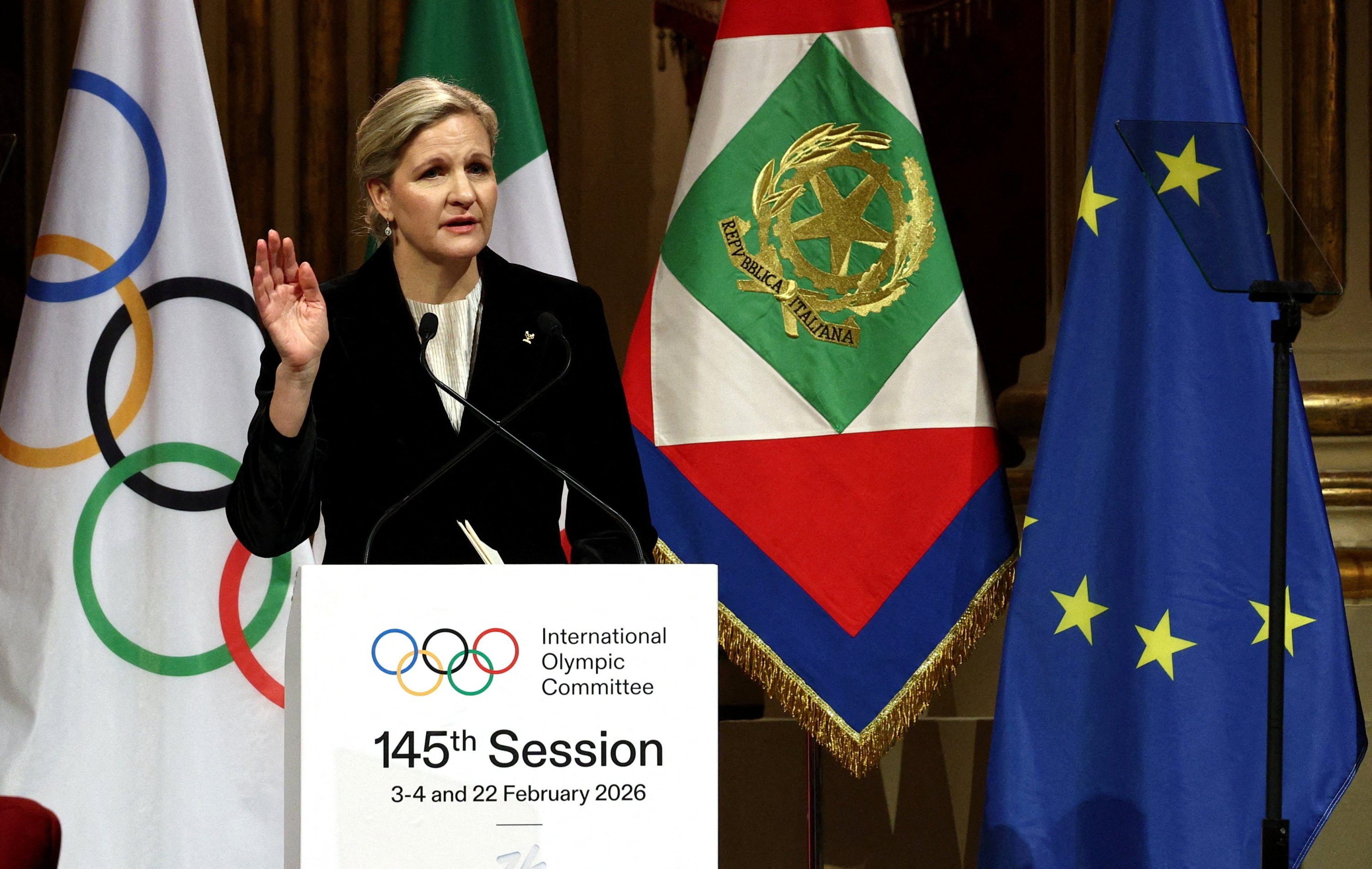
The initiative for a unified policy was launched in June under the leadership of the IOC’s first female president, Kirsty Coventry. Speaking at a press conference during the Milan–Cortina Winter Olympic Games, IOC spokesperson Mark Adams said,
“Protecting the female category is one of President Coventry’s key reform priorities.”
He added,
“The consultation phase has been completed, and the ‘pause and reflect’ period is over. There is broad consensus within the sporting community. We are hopeful that the new policy will be announced in the first half of this year.”
In September, Coventry established the “Protection of the Female Category” working group, comprising experts and representatives from international sports federations. The group’s mandate is to develop recommendations on how to ensure fairness and safety in women’s categories across sports.
Prior to this initiative, the IOC had long refrained from adopting a universal policy on transgender participation in the Olympic Games. In 2021, it instead instructed international federations to develop their own guidelines. Those rules remain in force, allowing transgender athletes to compete in the Olympics once cleared by their respective federations.
To date, only a small number of openly transgender athletes have competed in the Olympic Games. Among them is New Zealand weightlifter Laurel Hubbard, who made history by competing at the Tokyo 2021 Olympics in a gender category different from that assigned at birth.
Currently, regulations vary widely by sport. For example, World Aquatics allows transgender athletes who have completed their transition before the age of 12 to compete, while World Rugby has banned transgender athletes from all elite-level competitions.
Meanwhile, U.S. President Donald Trump has banned transgender athletes from competing in women’s categories at school, collegiate, and professional levels in the United States. As Los Angeles prepares to host the 2028 Summer Olympics, the issue has become increasingly politicized.
In February, after signing an executive order titled “Keeping Men Out of Women’s Sports,” Trump stated that he would not allow transgender athletes to compete at the Los Angeles Olympic Games.