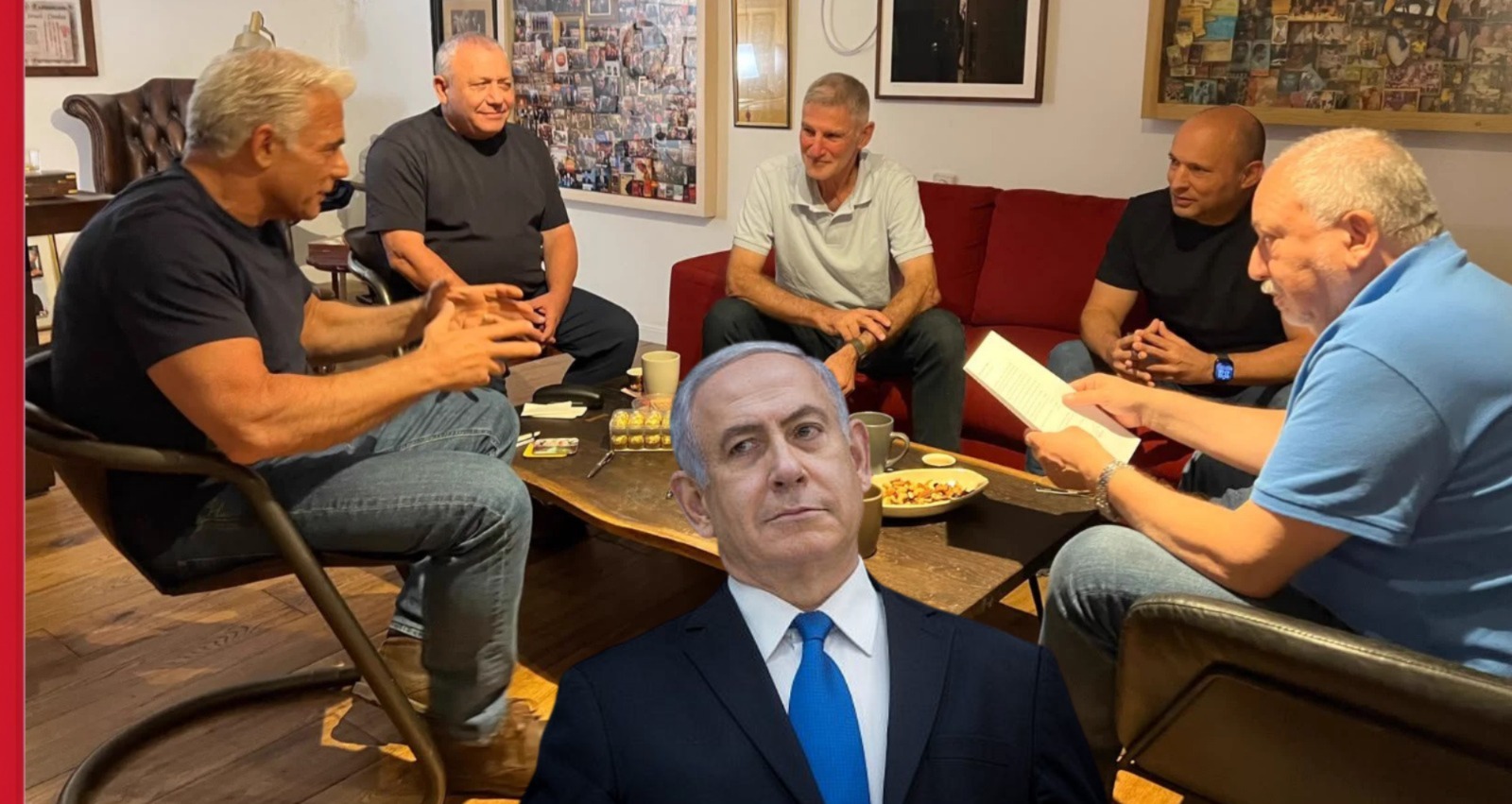

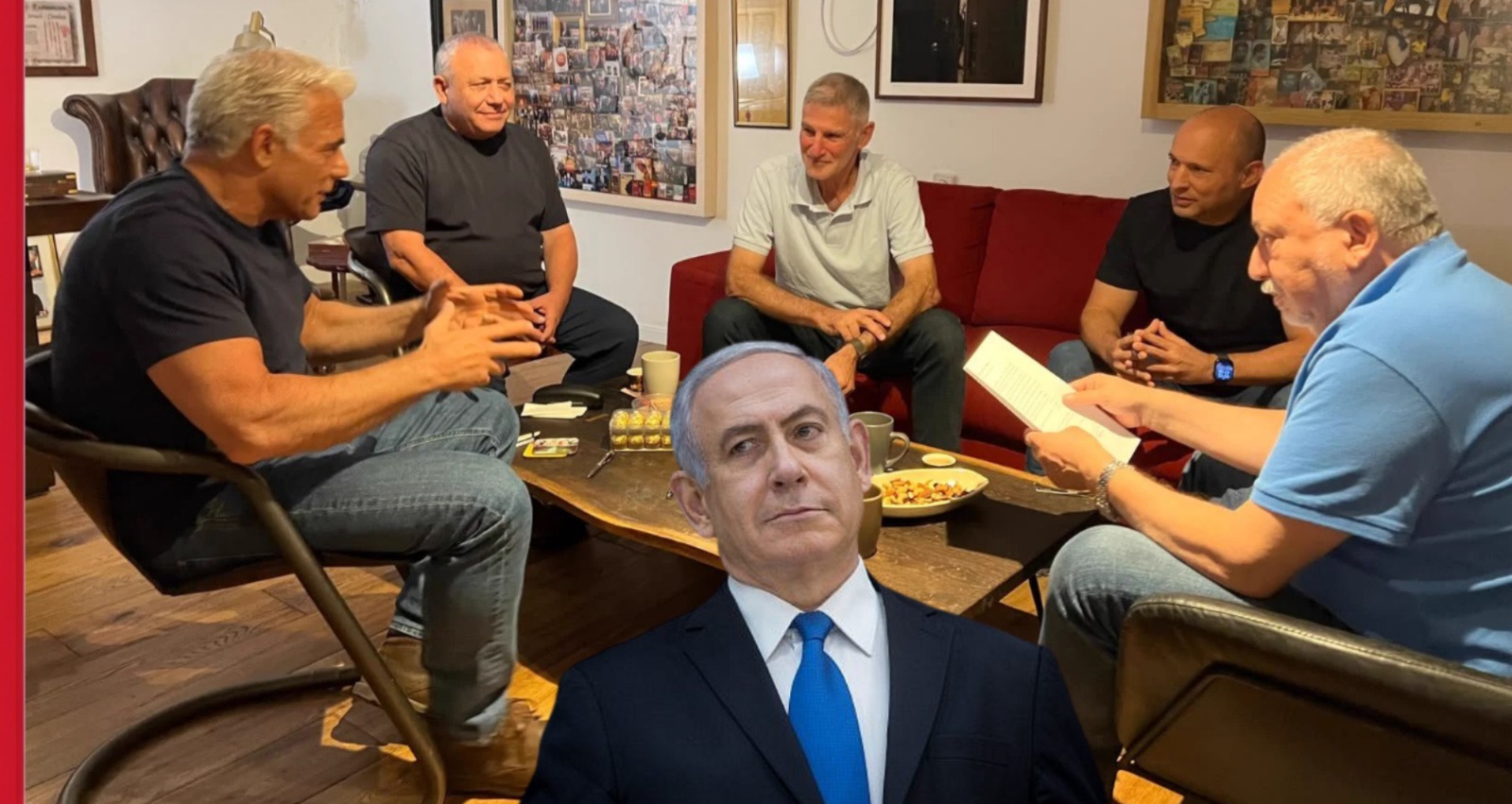
Five Powerful Israeli Opposition Leaders Unite Ahead of the October 27 Election as Benjamin Netanyahu Faces Mounting Pressure
Tel Aviv, Israel | October 17, 2026 | The Global Journal
Five prominent Israeli opposition leaders have pledged to coordinate their efforts to remove Prime Minister Benjamin Netanyahu from power ahead of the country’s national parliamentary election on October 27. However, despite their electoral cooperation, significant limitations remain in their positions on Palestinian statehood, the war in Gaza and Israeli military operations across the region.
On September 26, former Prime Minister Naftali Bennett, former military chief Gadi Eisenkot, Yair Golan and Avigdor Lieberman met at opposition leader Yair Lapid’s residence in Tel Aviv. Together with Lapid, they signed a non-aggression pact, pledging to avoid hostile campaigning against one another before the election and cooperate in forming a government afterward.
In a statement released following the meeting, the leaders said that despite their ideological differences, their common objective was to establish a “Zionist and statesmanlike government” committed to reform and reconstruction. However, it remains unclear who would lead a future government and how successfully the alliance would manage its internal differences.
A United Opposition, but How Much Policy Change?
The anti-Netanyahu camp includes representatives of right-wing, centrist and left-wing political traditions. However, analysts argue that several of the policies proposed by these leaders as alternatives to Netanyahu’s government resemble the current administration’s positions, particularly on security and the Palestinian question.
According to Al Jazeera’s analysis, none of the five leaders has made an explicit commitment to establishing a Palestinian state. The Democrats party acknowledges Palestinian statehood as a distant and undefined objective, while the other leaders maintain harder positions. Their criticism of Israeli military operations in Gaza and neighbouring countries has largely focused on government strategy, diplomatic management and the impact on Israel’s international image.
According to Ahron Bregman, a senior lecturer at King’s College London and an analyst on Israeli affairs, influential opposition figures such as Bennett, Lieberman and Eisenkot primarily represent right-wing politics. He argues that although Palestinian aspirations for independence lie at the heart of the Israeli-Palestinian conflict, the opposition leaders are not giving the issue sufficient attention.
Gadi Eisenkot — Yashar Party
Gadi Eisenkot served as chief of the Israeli military from 2015 to 2019. His name has been associated with the “Dahiya Doctrine”, a military approach involving the use of overwhelming force against armed groups such as Hezbollah and Hamas.
Eisenkot entered politics in 2022 through Benny Gantz’s National Unity alliance. Following the Hamas-led attack on southern Israel on October 7, 2023, he joined Netanyahu’s wartime cabinet. However, in June 2024, he resigned alongside Gantz, accusing the government of lacking a clear strategy for ending the war.
He subsequently established the Yashar Party. Its platform supports professional and effective governance, mandatory military service for everyone—including ultra-Orthodox Jewish men—and the establishment of a state commission of inquiry into the security failures surrounding the October 7 attack.
Although Eisenkot has criticised Israel’s reliance on Washington to achieve its war objectives and has questioned aspects of the relationship with the United States, he has not publicly challenged the fundamental goals of Israel’s military campaigns in a major way.
He has also ruled out including the Arab party United Arab List, commonly known as Ra’am, in a future government. According to reports, he told Channel 12 on September 26 that no Arab party would accept his conditions, which include recognising Israel as a Jewish state.
Naftali Bennett and Yair Lapid — Beyachad Alliance
Former Prime Minister Naftali Bennett and Yair Lapid announced the formation of their joint electoral alliance, Beyachad, meaning “Together”, in April 2026. Between 2021 and 2022, they jointly governed Israel for approximately 18 months during the period between Netanyahu’s two terms in office.
Bennett has long supported the expansion of Israeli settlements in the occupied West Bank. Lapid, meanwhile, is the founder of the centrist Yesh Atid party. Despite their political differences, establishing a Palestinian state is not among their stated electoral priorities.
Lapid has criticised the international reaction to Israel’s war in Gaza and its military operations in neighbouring countries. However, his objections to the underlying justification for these operations have been comparatively limited.
Bennett has strongly supported military action against Iran. According to reports, he also praised Israel’s military and security forces following the Israeli attack on Doha, Qatar, in September 2025.
The attack targeted senior Hamas figures who were meeting to discuss a proposed US-backed Gaza ceasefire. A Qatari security official was killed in the strike, which drew condemnation from across the Middle East and beyond.
Bennett and Lapid now support forming a government exclusively with Zionist parties and have ruled out relying on Arab parties to secure a governing majority.
Avigdor Lieberman — Yisrael Beiteinu
Avigdor Lieberman founded the Yisrael Beiteinu party in 1999. The party has built a right-wing support base primarily among Russian-speaking immigrants.
Although Lieberman was once a close ally of Netanyahu, he now opposes joining a government led by the prime minister. He also rejects forming a government dependent on ultra-Orthodox Jewish parties or Arab parties.
His past remarks on Gaza and his support for more aggressive military action in Lebanon have established him as one of the most hardline right-wing figures within the opposition camp.
Analysts say his opposition to Netanyahu has brought him into the alliance, but uncertainty remains over his independent political agenda and future coalition choices. Some observers have not ruled out the possibility that he could return to Netanyahu’s right-wing bloc if political circumstances change.
Yair Golan — The Democrats Party
Yair Golan is regarded as the representative of Zionist left-wing politics among the five leaders. He heads the Democrats party, formed in 2024 through the merger of the Labour and Meretz parties.
A retired major general and former deputy chief of the Israeli military, Golan has been more critical of the government’s war strategy than many of his opposition counterparts.
In May 2025, a remark he made concerning the killing of children in Gaza triggered controversy within Israel. He later sought to explain his comments following widespread criticism.
Golan has been comparatively more open than the other leaders to working with Palestinian political parties, although his position has not been entirely consistent. In September 2026, he faced criticism after supporting the disqualification of Sami Abu Shahadeh, leader of the Arab Balad party, from the election.
According to Roi Zur, an expert on Israeli politics at the University of Essex, Golan and Lieberman may both be important to the formation of a future government despite their differences over security and conflict.
Both oppose Netanyahu and oppose exemptions from military service for ultra-Orthodox Jewish men.
Netanyahu Faces Challenges, but the Opposition Has Its Own Limitations
The October 27 election could become an important test for Netanyahu’s long political career. The coordinated efforts of the five opposition leaders represent an attempt to present a viable political alternative. However, disagreements over leadership, cooperation with Arab parties and the policies of a future government could pose significant challenges.
A recent Associated Press report also noted that Arab-led parties, particularly Ra’am, could become important in determining the formation of the next government. However, Netanyahu and many of the leading opposition figures have expressed reluctance to form coalitions with Arab parties. This position could complicate the process of forming a government after the election.
Overall, the unity of Israel’s five opposition leaders represents a significant electoral development as they seek to remove Netanyahu from power. Yet, despite their pledge to cooperate, their commitments to fundamental policy changes on Palestinian statehood, the war in Gaza and regional military operations remain limited. A change in government could therefore bring new political leadership without necessarily producing major changes in Israel’s approach to the Palestinians or regional conflicts.
Sources: Al Jazeera, Associated Press, The Times of Israel and other media outlets.
The Global Journal | International News Desk