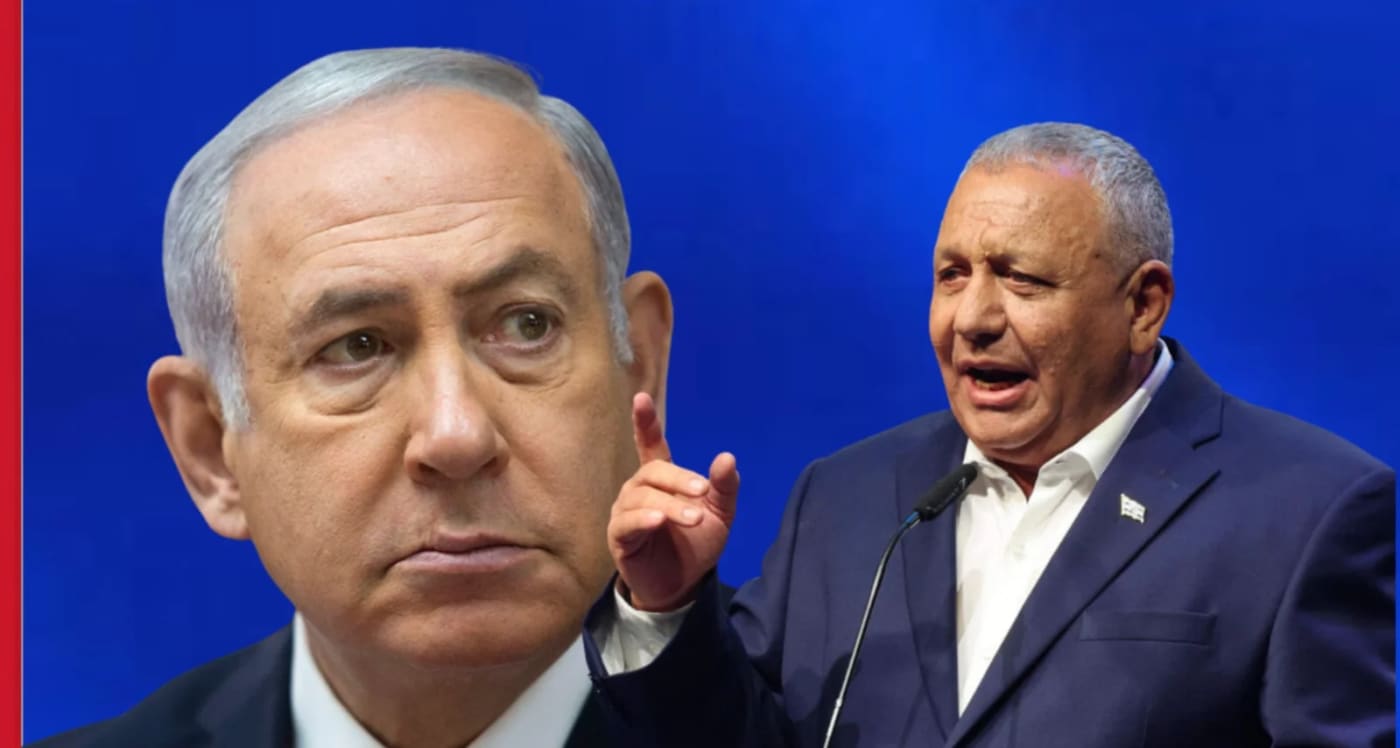

Netanyahu’s Era May Be Coming to an End as Former Military Chief and Opposition Leader Gadi Eisenkot Emerges as Potential New Israeli Prime Minister
Jerusalem, Israel | November 5, 2026 | The Global Journal
A major political shift may be unfolding in Israel as the Arab Joint List alliance has announced its support for former military chief and opposition leader Gadi Eisenkot to become the country's next prime minister, potentially paving the way for the removal of longtime Prime Minister Benjamin Netanyahu.
The decision could help Eisenkot secure the parliamentary support needed to form a new government in Israel's 120-member Knesset.
On Thursday (November 5), the Arab Joint List alliance announced that it would formally recommend Eisenkot during consultations with President Isaac Herzog over who should be entrusted with forming the next government. Eisenkot currently leads the Yashar Party.
According to a report by Israeli media outlet Ynet, Eisenkot could receive the backing of 67 lawmakers in the 120-seat Knesset if the Arab Joint List's support is formally confirmed. This would exceed the 61 seats required for a parliamentary majority by six seats.
In a statement, the Joint List said, “We have decided to support Gadi Eisenkot.” The alliance added that the decision was reached unanimously following discussions among its constituent parties, although it acknowledged that the choice had not been an easy one.
The statement further emphasized the alliance's determination to remove Prime Minister Benjamin Netanyahu from power. However, it expressed reservations about whether Eisenkot's opposition bloc had demonstrated sufficient commitment to effectively challenging Netanyahu's policies, confronting incitement against Arab citizens, and defending the legitimacy of their political choices.
Power Struggle Over the Knesset Seat Distribution
Following Israel's parliamentary election held on October 27, the distribution of seats in the 120-member Knesset stands as follows:
- Netanyahu-led coalition: 53 seats.
- Opposition bloc led by Eisenkot: 48 seats.
- Arab-led parties: 19 seats.
Earlier, the Ra'am Party, which holds eight seats, had already announced its support for Eisenkot. With the additional backing of the 11 lawmakers from the Joint List, the total number of recommendations in his favour could reach 67.
Parliamentary Support Does Not Guarantee Premiership
However, receiving recommendations from 67 lawmakers does not automatically mean that Eisenkot has secured a governing coalition or is guaranteed to become prime minister.
President Isaac Herzog will consider the lawmakers' recommendations and the broader political circumstances before deciding whom to formally task with forming the next government.
The candidate entrusted with forming the government will initially have 28 days to complete the process. The president may grant an additional 14 days if necessary. If the candidate fails to secure the required political agreements and parliamentary support within the allotted period, alternative constitutional procedures may follow.
Netanyahu’s Political Future Remains Uncertain
Meanwhile, opposition parties have agreed to coordinate their efforts to form a new government and begin discussions on policy priorities and potential coalition agreements.
Although Netanyahu's coalition secured the largest number of seats in the election, it failed to achieve the 61-seat parliamentary majority required to govern independently. Eisenkot now faces the challenge of translating support from Arab-led parties into a workable governing coalition.
Overall, the Joint List's decision represents a significant political challenge to Netanyahu's longstanding dominance of Israeli politics. However, whether a new government will be formed under Eisenkot and whether Netanyahu's premiership will come to an end will ultimately depend on the president's decision and subsequent political negotiations.