
All Eyes Are Now on Bangladesh: What Is Happening in December? Sheikh Hasina's Historic Return to the Homeland vs. the New Geopolitical Equation
Analysis | The Global Journal | Columnist: Mr. Fozla Rabbi Robna
Dhaka | July 17, 2026
Bangladesh has now emerged as the focal point of global political attention. On one hand, it is a strategic cornerstone on the chessboard of Asian geopolitics; on the other, it has become a major testing ground for the polarization of global powers. The strategic location of Saint Martin's Island along the Bay of Bengal, the economic potential of Cox's Bazar and Ukhia, Chattogram's transformation into a commercial hub, and the geographical significance of the hill tracts, known as the country's gateway—all together have elevated international interest in Bangladesh to an unprecedented level.
This interest primarily emerged following the ouster of Prime Minister Sheikh Hasina from power in 2024. Sheikh Hasina herself has added a new dimension to that interest. Following the August 5 student-public uprising, described as a "meticulous design," Sheikh Hasina took refuge in India under state protocol. Since then, she has repeatedly described the August 5 movement as a foreign conspiracy against the country and has consistently declared her intention to return home.
However, in an interview with the British news agency Reuters, she mentioned a possible timeframe for the first time, stating that, Insha'Allah, she will return to Bangladesh in December, and "even if I die, I am prepared to die on the soil of my own country."
Following this announcement, political analysts have placed one issue at the center of discussion—that Sheikh Hasina's possible return in December will not only mark the beginning of a new chapter in Bangladesh's political equation but will also create a new balance in the broader diplomatic and geopolitical landscape of South Asia.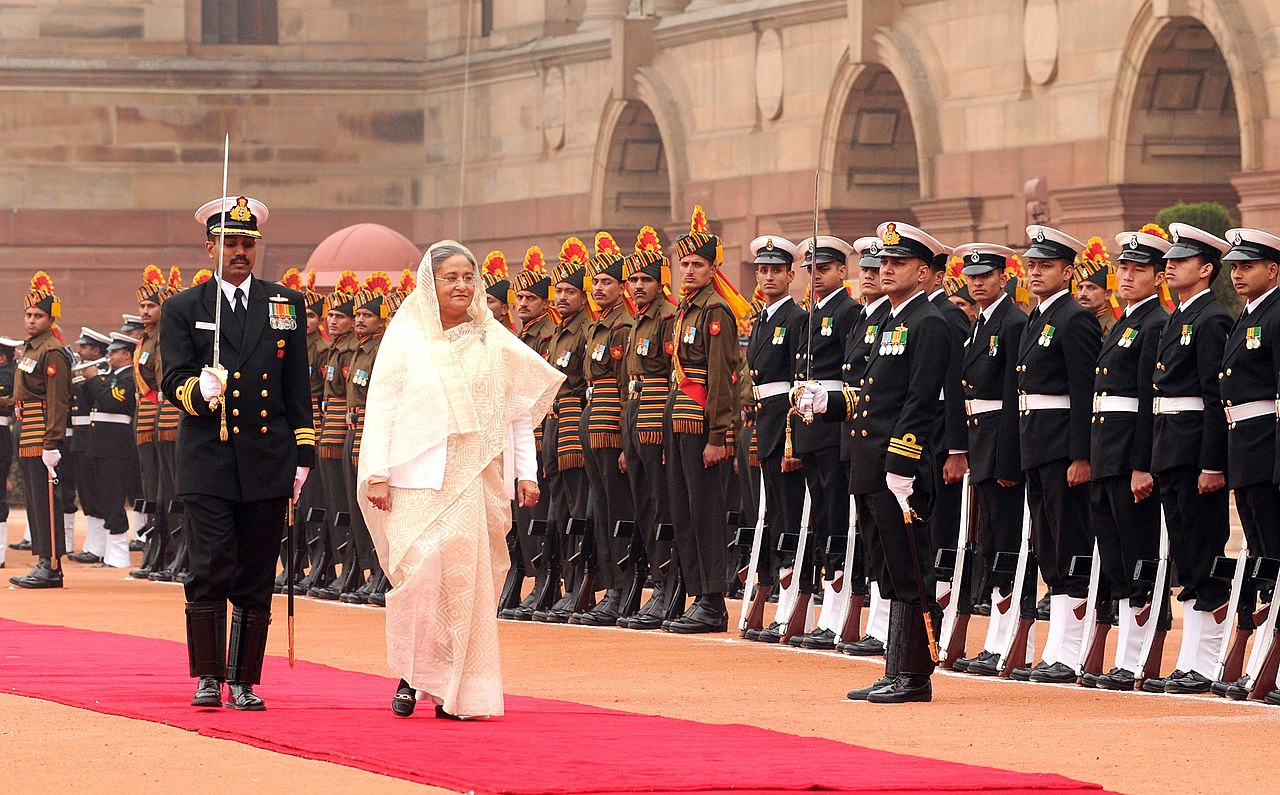
The interests of the world's major powers in Bangladesh are currently competitive with one another, yet interconnected in many respects.The United States views Bangladesh through the lens of its democratic process, the Indo-Pacific strategy, and security in the Bay of Bengal. China, on the other hand, is interested in expanding its long-term economic influence in Bangladesh through its Belt and Road Initiative, infrastructure investments, port development, and trade connectivity.
For India, Bangladesh is not merely a neighboring country; rather, it is a key partner in the security of India's northeastern region, regional connectivity, river management, and border cooperation. At the same time, Russia is interested in further deepening cooperation in nuclear energy, defense, and the energy sector.
Meanwhile, the European Union considers Bangladesh an important export partner, an investment destination, and a significant area of discussion regarding human rights and democratic governance.
Iran's interest in the Middle East and regional security, along with the Middle Eastern countries' perception of Bangladesh as an important labor market, investment destination, and an influential state in the Muslim world, also adds to the equation.
Pakistan, more than five decades after Bangladesh's independence, is also attempting to reassess Dhaka-Islamabad relations within the framework of the new regional reality. At the center of all these multidimensional interests lies Bangladesh's internal political stability.
If Sheikh Hasina indeed returns to Bangladesh in December, it will not merely be a significant event in Bangladesh's domestic politics but a historic event in world politics. However, its political, constitutional, security, and diplomatic implications will depend on the realities of that time, the decisions of the state, the positions of political parties, and the reactions of international stakeholders.
At this moment, Sheikh Hasina's return to the homeland is increasing political tensions inside the country, diplomatic activities, the attention of international media, and the active observation of foreign policymakers. Simultaneously, fresh discussions have begun regarding South Asia's balance of power, regional security, and the Indo-Pacific strategy.
Bangladesh today is no longer merely a nation of 170 million people; it is one of the most important strategic gateways in the geopolitics of the Indian Ocean, a gateway to regional trade, and a key arena in the strategic competition among global powers. As a result, Bangladesh's political developments have now become an important subject of discussion within the international diplomatic arena.
Consequently, Sheikh Hasina's return to the homeland will reshape many of the political equations that have existed since August 5, giving rise to a new geopolitical and political equation. Therefore, it would not be unreasonable to say that Sheikh Hasina's return will have an impact from geopolitics to world politics across every arena. For this reason, all eyes are now on Bangladesh, centered on the possibility of Sheikh Hasina's historic return to the homeland in December.
December, therefore, is not merely another month; it has become a crucial period of observation for Bangladesh's domestic politics, South Asian geopolitics, and the international diplomatic equation.
Columnist: Mr. Fozla Rabbi Robna