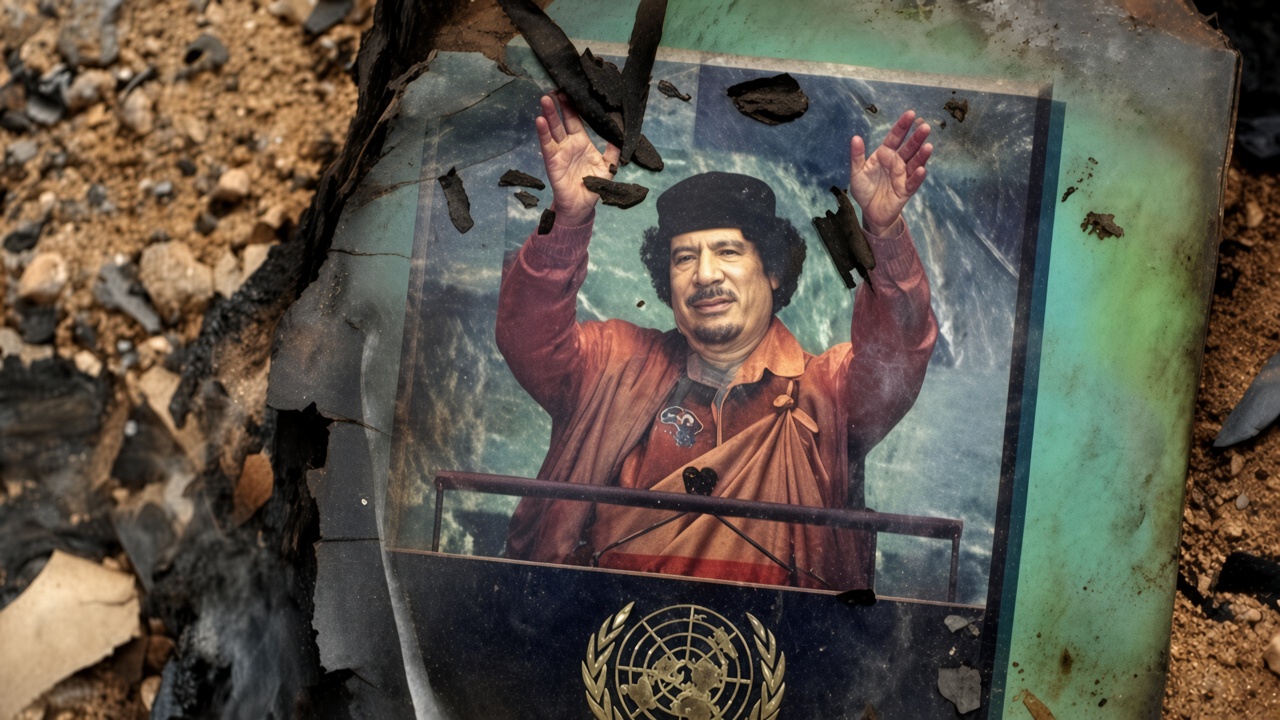
Killed Brutally 15 Years Ago, Yet Muammar Gaddafi Remains in the Memories of Many Libyans for the Stability of His Rule
Tripoli, Libya | October 23, 2026 | The Global Journal
Fifteen years after the death of Libya’s former ruler Muammar Gaddafi, his influence continues to shape the country’s political debate and public consciousness. Amid political divisions, the dominance of armed groups, corruption, and weak state institutions, nostalgia for Gaddafi’s era is growing among a section of the population. However, this sentiment should not automatically be interpreted as unconditional support for his authoritarian rule. For many, it reflects a longing for the relative stability and functioning state institutions they associate with the past.
An article published by the Middle East-based news outlet Middle East Monitor on October 22 explores Gaddafi’s political legacy, the killing of his son Saif al-Islam, and Libya’s political realities since 2011. The article was written by Mustafa Fetouri.
Fifteen Years Since Gaddafi’s Death: An Unresolved Chapter
Gaddafi was killed in the Libyan city of Sirte on October 20, 2011. Following his death, he was reportedly buried at a secret location, the whereabouts of which have never been publicly disclosed. His supporters marked the 15th anniversary of his death on October 20, 2026.
For Gaddafi’s supporters, his undisclosed burial site represents more than a historical episode; it has become a symbol of Libya’s political instability and unresolved past. Many believe that Gaddafi’s fall in 2011 also marked the collapse of the country’s former state system. The hope of building a stable and unified state has yet to be fulfilled.
However, Gaddafi’s decades-long rule was also characterized by authoritarianism. Human rights organizations have repeatedly criticized restrictions on political opposition and freedom of expression during his time in power. As a result, his legacy remains deeply contested within Libyan society.
Saif al-Islam’s Death Raises Fresh Questions
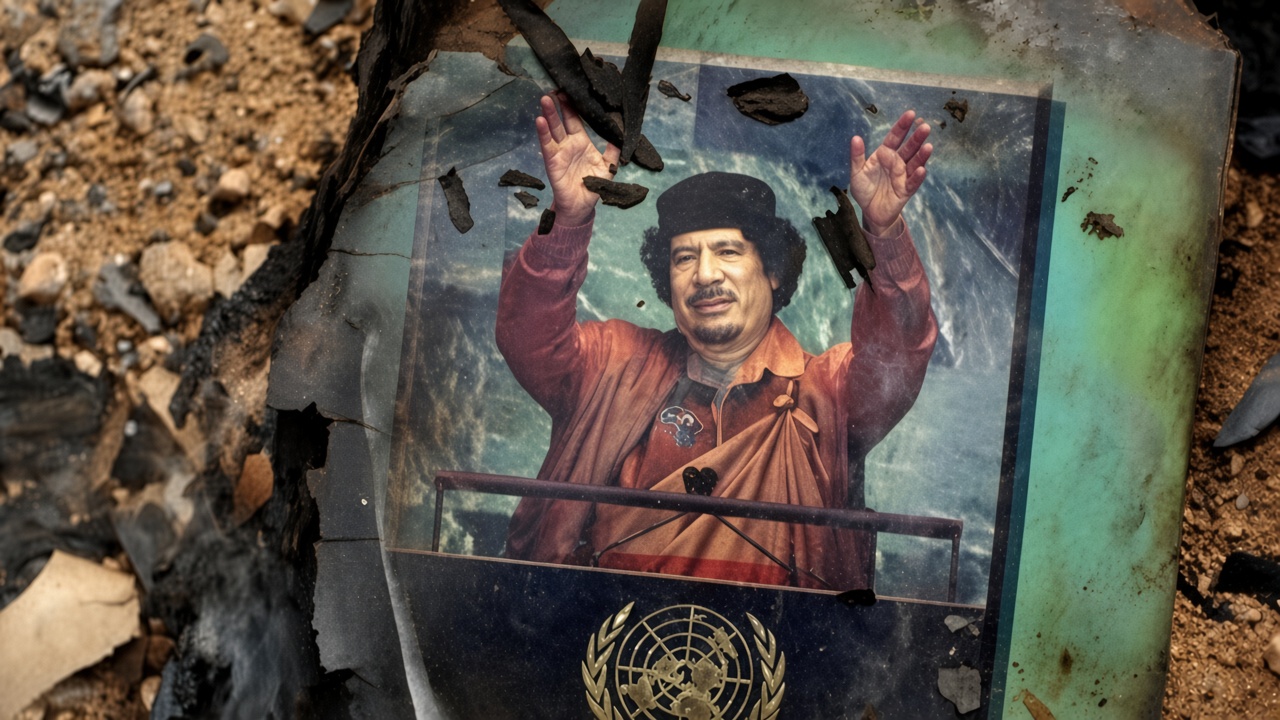
The death of Gaddafi’s son, Saif al-Islam Gaddafi, has further intensified political debate in Libya. According to Middle East Monitor, he was killed in February 2026. The large turnout at his funeral in Bani Walid, along with gatherings featuring the former regime’s green flags, has been interpreted by the article’s author as an expression of public dissatisfaction with the country’s current political circumstances.
Saif al-Islam’s death represents not only the loss of a member of the Gaddafi family but also raises questions about the possibility of alternative political leadership in Libya. Some of his supporters viewed him as a potential political alternative associated with the former state system. However, it is impossible to determine whether his leadership would have brought stability to the country.
The article states that Libya’s Office of the Public Prosecutor had announced the identification of suspects and the issuance of arrest warrants in connection with his killing. However, according to the report, no suspects had been brought before a court by the time it was published. These claims require independent verification through official records and additional reporting.
Memories of Stability Versus Authoritarian Rule
Nostalgia for Gaddafi’s era is often linked to security, living costs, and access to state-provided benefits. According to the article, some low-income Libyan families received income or benefits associated with state resources. Revenue from key sectors, including oil and telecommunications, played a role in supporting people's livelihoods.
Since 2011, political conflict, the influence of armed groups, and weakened state institutions have increased uncertainty in many people's daily lives. Consequently, some Libyans look back fondly on aspects of the social and economic security they associate with Gaddafi’s rule.
Nevertheless, memories of stability should not obscure the political repression and restrictions on freedoms that characterized his government. Likewise, the instability that followed his overthrow does not automatically establish the legitimacy of his former system. Both realities must be considered when assessing Libya’s present circumstances.
Corruption and Weak State Institutions
One of Libya’s major challenges remains corruption and the lack of accountability. Citing Transparency International’s 2025 Corruption Perceptions Index, the Middle East Monitor article states that Libya ranked 177th among 182 countries and territories.
Although the 2011 uprising ended Gaddafi’s long rule, political violence did not come to an end. Instead, the growing influence of armed groups and militias, power struggles, and allegations of political retaliation have weakened state institutions. These problems have obstructed efforts to resolve political disputes through elections, the rule of law, and accountability.
Allegations that Gaddafi secretly transferred substantial sums of money to Western banks have also circulated for years. However, the article’s author claims that extensive international investigations have not produced evidence supporting allegations that Gaddafi personally transferred billions of dollars into secret Western bank accounts. This remains the author’s assertion and would require independent examination of the relevant investigations and financial records.
Foreign Influence and the Question of Sovereignty
Libya’s crisis extends beyond domestic politics, with foreign influence remaining a significant point of contention. In 2019, Türkiye and Libya’s then Government of National Accord signed agreements covering security cooperation and maritime boundaries. At the time, forces led by Khalifa Haftar were advancing toward Tripoli. Turkish military assistance helped the internationally recognized government withstand the offensive.
The agreements sparked debate among Libya’s political factions. Critics questioned their implications for national sovereignty, while supporters emphasized security cooperation and maritime interests.
The October 22 article by Middle East Monitor claims that Libya’s parliament approved the maritime agreement with Türkiye on October 20, 2026. The author interprets this as a shift from earlier opposition. However, official parliamentary records and statements from the relevant parties are necessary to establish the details of the approval, its legal scope, and its implementation status.
Justice and National Reconciliation Remain Major Challenges
The unresolved circumstances surrounding the deaths of Gaddafi and his son Saif al-Islam highlight concerns about Libya’s judicial system and the capacity of its state institutions. Issuing arrest warrants alone is not enough. Impartial investigations, bringing suspects into the legal process, and ensuring trials based on evidence are equally essential.
Achieving lasting stability in Libya will require investigations into political killings, equal justice under the law, and a stronger process of national reconciliation. The country must also address how revenue from its oil wealth can be managed transparently and how state institutions can be freed from the influence of armed groups.
Fifteen years after Gaddafi’s death, his name remains central to Libya’s political debate. For some, he symbolizes the stability of the past; for others, his rule represents authoritarianism and political repression. Beyond these competing interpretations, Libya’s future will depend on its ability to build effective institutions, ensure accountability for political violence, and protect the security and rights of its citizens.
Source: Middle East Monitor, October 22, 2026.