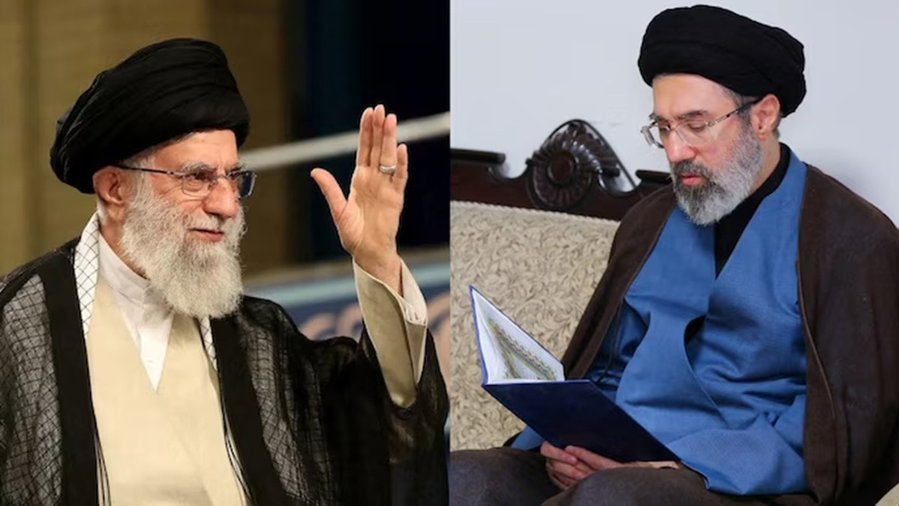
The absence of Iran's Supreme Leader Mojtaba Khamenei is becoming a liability for the Islamic Republic
The Global Journal | Tehran | July 11, 2026
More than four months after assuming Iran's highest office, Supreme Leader Mojtaba Khamenei remains absent from public view, fueling growing uncertainty inside Iran as the Islamic Republic faces renewed conflict, economic pressure, and political instability.
Mojtaba Khamenei has not appeared publicly since he was appointed Supreme Leader by Iran's Assembly of Experts on March 8, following the death of his father, Ayatollah Ali Khamenei, who was killed in a U.S.-Israeli strike in late February.
His complete absence from the funeral ceremonies of the former leader—without even a written message, recorded statement, or newly released photograph—has intensified speculation about his health, security, and ability to govern during one of the most turbulent periods in the Islamic Republic's 47-year history.
According to senior Iranian sources, Mojtaba Khamenei suffered facial disfigurement and other injuries in the strike that killed his father. While the sources say he has continued making key state decisions behind the scenes with the support of the Islamic Revolutionary Guard Corps (IRGC), they add that he has not yet recovered sufficiently to make a public appearance.
The renewed hostilities between Iran and the United States this week have placed even greater focus on the country's unseen leader.
Many Iranians say they understand the security risks surrounding the Supreme Leader but believe the country needs visible leadership during a national crisis.
"There is a need for the Supreme Leader to be seen," said Taghi, a 47-year-old shopkeeper in Isfahan. "Even if he has been injured, people need reassurance that there is a leader running the country."
The funeral of Ayatollah Ali Khamenei highlighted the importance of family ties within Iran's political and religious establishment. While Mojtaba Khamenei remained absent, funeral prayers over his father's coffin were led by his three brothers, all senior clerics but not considered major political figures.
In another symbolic gesture of continuity, Ali Khomeini, the grandson of the founder of Iran's 1979 Islamic Revolution, is expected to represent Mojtaba Khamenei at a major mourning ceremony.
Iranian officials have attributed the new Supreme Leader's continued absence to both health concerns and extraordinary security threats following the assassination of his father during the opening phase of the conflict with the United States and Israel.
President Masoud Pezeshkian last commented publicly on Mojtaba Khamenei's condition in May, stating that he had met with the Supreme Leader and that his health was improving. Since then, no official photographs, videos, or public appearances have been released.
Political analysts warn that the prolonged absence of Iran's highest authority could gradually undermine public confidence, despite the Revolutionary Guards maintaining tight control over the country's security and political institutions.
Ali Ansari, Professor of Modern History at the University of St Andrews, said the situation presents a long-term challenge for the Islamic Republic.
"How do you have a charismatic succession when the successor isn't there? It may be manageable for a while, but it is not sustainable over the long term," he said.
Unlike Ayatollah Ruhollah Khomeini, the charismatic founder of the Islamic Republic, or even Ali Khamenei, who gradually consolidated power during his 37-year rule, Mojtaba Khamenei entered office without significant religious authority or an independent political profile.
Instead, he is widely known for managing his father's extensive office and maintaining close relationships with the Islamic Revolutionary Guard Corps, which is expected to remain the primary pillar of his leadership.
Inside Iran, concerns about the Supreme Leader's absence continue to grow.
"The Supreme Leader's absence, especially after the war and the burial of the late leader, could increase uncertainty and disorder," said Mohammadreza, a 51-year-old teacher in Tehran.
As Iran continues to face international sanctions, fragile ceasefire arrangements, economic hardship, and the possibility of renewed domestic unrest, the country's unseen Supreme Leader remains one of the biggest unanswered questions in Iranian politics.
Whether Mojtaba Khamenei soon returns to public view—or continues governing from behind the scenes—may shape the future stability of the Islamic Republic in the months ahead.