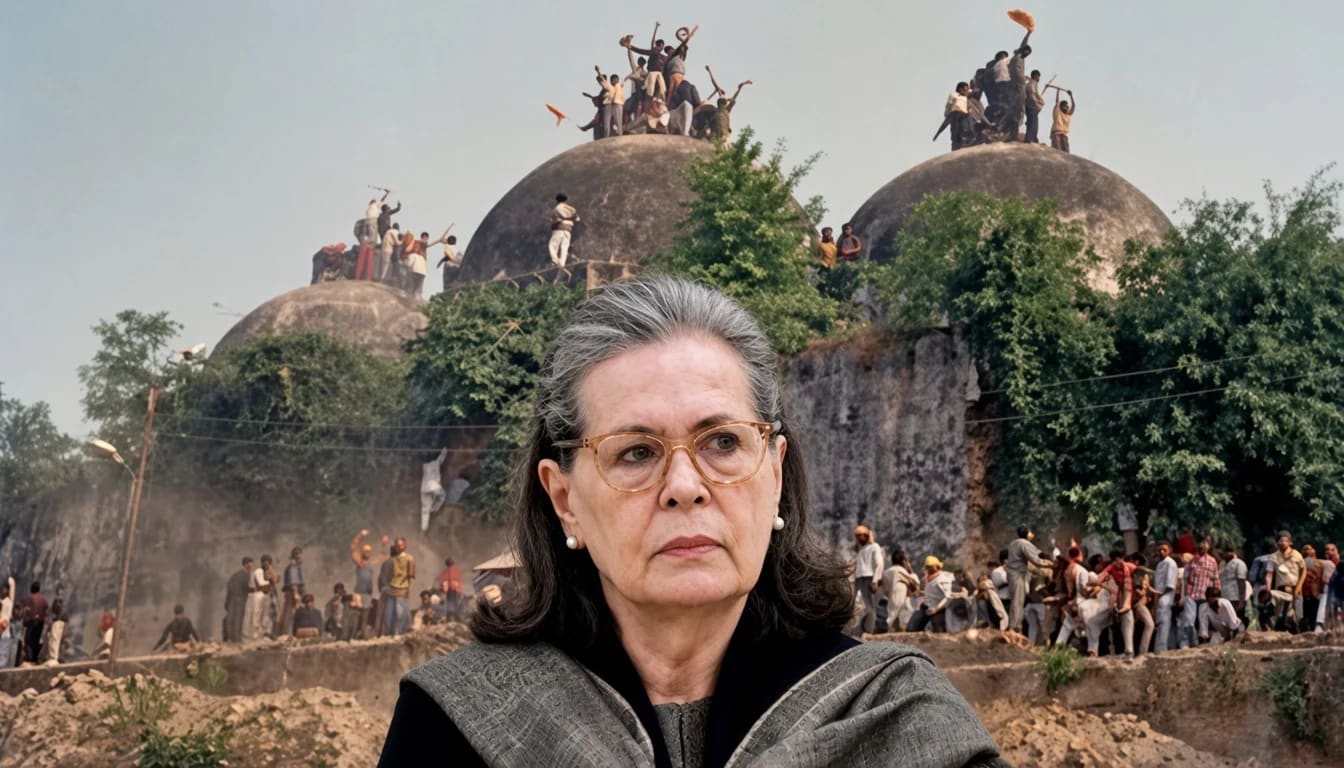

“I cried when I watched the demolition of India’s historic Babri Masjid on television” — Congress Chairperson Sonia Gandhi
New Delhi, India | November 8, 2026 | The Global Journal
Sonia Gandhi, chairperson of India’s principal opposition party, the Indian National Congress, has revealed that she broke down in tears after watching the demolition of the historic Babri Masjid in December 1992. She recalled this painful memory in an interview with British newspaper The Guardian ahead of the publication of her forthcoming memoir.
According to Sonia Gandhi, the demolition of the Babri Masjid made her deeply realize how long, difficult and challenging the struggle to protect India's secular character would be. Her recollection has once again brought one of the most sensitive chapters in India's political and social history into the spotlight.
She also acknowledged that the Congress party's own failures and complacency had partly contributed to the rise of the Bharatiya Janata Party (BJP) and its Hindutva-driven politics in India. In this regard, she admitted that the Congress had often become overly complacent and that a degree of indifference had developed within the party. Her remarks have reignited discussions about the Congress party's role in India's political history.
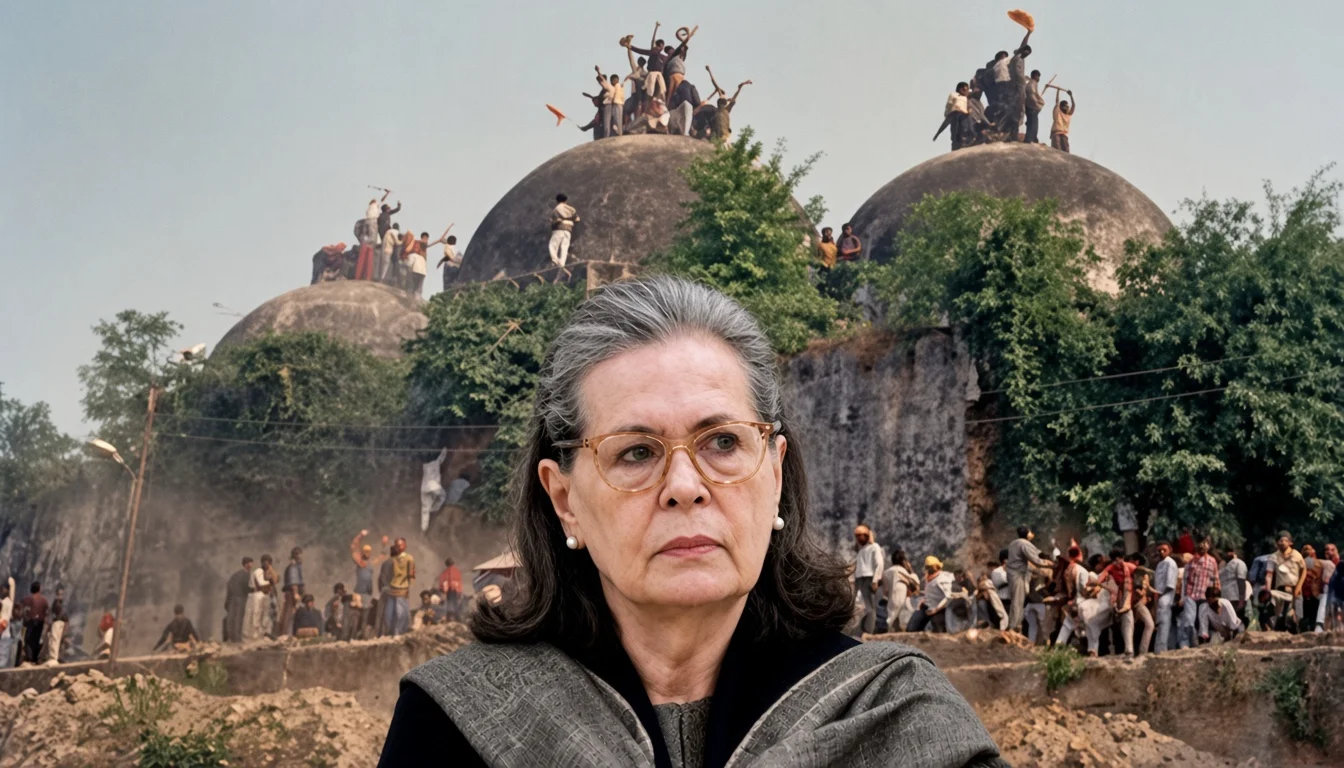
Following the publication of Sonia Gandhi's comments, a fresh political war of words has erupted between the Congress and the BJP. BJP Rajya Sabha MP and party leader Sudhanshu Trivedi strongly criticized her remarks, accusing the Congress of continuing to pursue a politics of sympathy toward Mughal emperor Babur. He argued that Sonia Gandhi's emotional comments about the Babri Masjid reflect the Congress party's political position.
Trivedi also drew comparisons between Sonia Gandhi's remarks and the Ayodhya-related political decisions taken by her late husband and former Indian Prime Minister Rajiv Gandhi. He questioned exactly when and on which television channel Sonia Gandhi had watched the demolition of the Babri Masjid on December 6, 1992, arguing that she should clarify the circumstances surrounding her recollection. He pointed to the sequence of events involving the entry of kar sevaks into the site, the demolition of the mosque and the subsequent television coverage.
It is worth noting that on December 6, 1992, a large gathering of kar sevaks associated with the Ram Janmabhoomi movement demolished the Babri Masjid in Ayodhya, Uttar Pradesh. The incident subsequently marked a historic turning point in India's communal politics and debates over religious harmony and secularism. Following decades of legal disputes, India's Supreme Court in 2019 paved the way for the construction of a Ram temple on the disputed site and directed that an alternative five-acre plot of land be allocated for the construction of a mosque.
Sonia Gandhi's memoir, Belonging: A Journey of Love, is scheduled to be published on November 10. Even before the book's release, her recollections and admission regarding the Congress party's political shortcomings have triggered a fresh controversy in Indian national politics. In particular, discussions are expected to intensify over India's secular identity, the rise of Hindutva politics and the historical consequences of the Babri Masjid demolition.
Sources: The Guardian | The Times of India