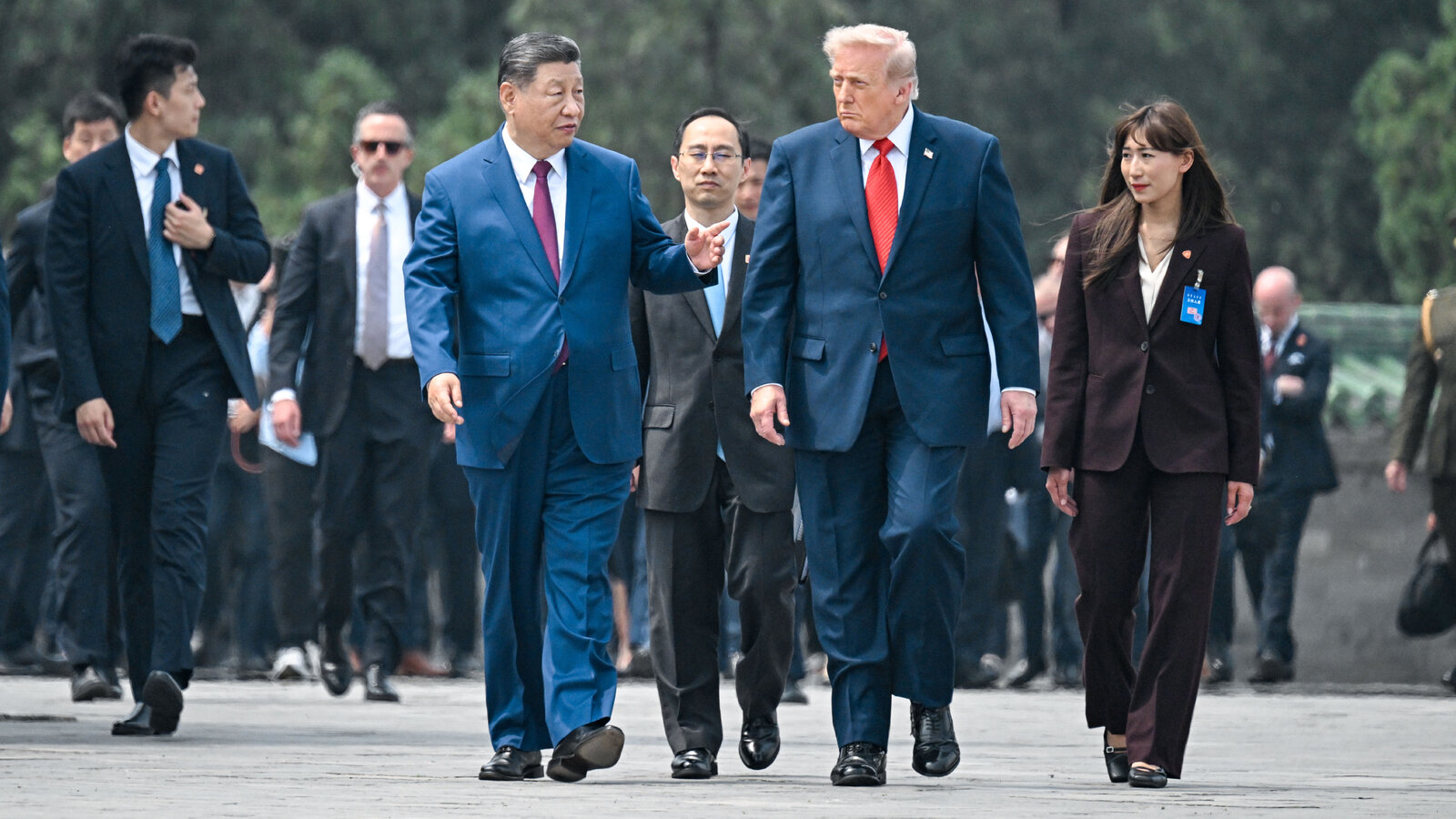

Chinese President Xi Jinping to Visit the United States on September 23- President Donald Trump May Personally Welcome Him at the Airport
September 18, 2026 | United States | The Global Journal
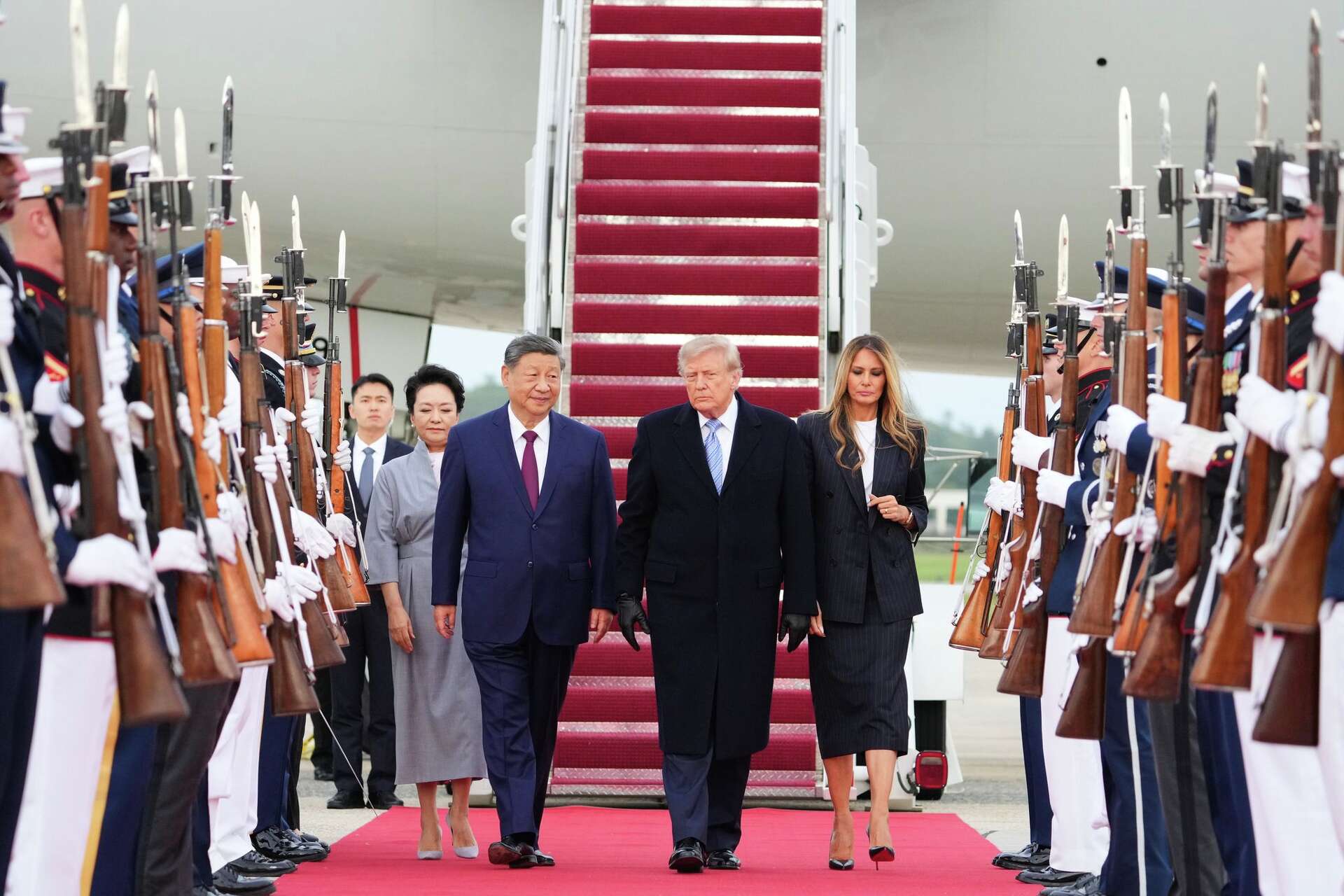
U.S. President Donald Trump is reportedly expected to personally welcome Chinese President Xi Jinping on the runway at Joint Base Andrews when Xi arrives in Washington on September 23. The move is being viewed as an unusual departure from long-standing U.S. diplomatic protocol.
The reception, scheduled for around 4 p.m. EDT on Wednesday, will mark the beginning of Xi’s three-day high-level state visit. The main part of the visit is expected to include a meeting between Trump and Xi at the White House on September 24, followed by an official state dinner.
While welcoming foreign heads of state on airport runways is a common diplomatic practice in many countries, it is extremely rare for a sitting U.S. president to personally go to an airport to welcome a foreign leader and is generally associated with special historical circumstances.
What Is the Usual U.S. Protocol?
Under standard U.S. State Department protocol, foreign heads of state arriving at Joint Base Andrews in Maryland are generally welcomed by the U.S. Chief of Protocol, senior military officials, the ambassador of the visiting country, or, on some occasions, a Cabinet member or the vice president.
A formal state reception with full military honors—including a 21-gun salute, color guard and the national anthems of both countries—is generally held on the South Lawn of the White House.
According to a source cited by AFP, Trump himself will attend the arrival ceremony for Xi at the airport. It is being reported that this would be the first time during his second term that Trump personally welcomes a foreign leader at an airport.
Possible Schedule for Xi’s State Visit
- Wednesday, September 23: Xi arrives at Joint Base Andrews, where Trump is expected to welcome him in the presence of a military honor guard.
- Thursday, September 24: Bilateral meetings at the Oval Office and Cabinet Room. Discussions may focus on global economic stability, trade policy, security in the Taiwan Strait and the importance of energy corridors.
- Thursday evening, September 24: An official state dinner at the White House. According to reports, this would be the second state dinner hosted by Trump during his second term; the previous one was held for Britain’s King Charles III and Queen Camilla.
- Friday, September 25: Xi is expected to depart following high-level working sessions.
Why Is a Presidential Airport Welcome So Rare?
In modern U.S. diplomatic history, it is highly unusual for a U.S. president to leave the White House and wait on the runway to welcome a foreign leader arriving at an airport.
Under the usual presidential protocol, foreign leaders travel to the White House for formal engagements. Therefore, when a president personally goes to an airport to welcome a foreign leader under exceptional circumstances, it can carry a significant diplomatic message.
In 2008, former U.S. President George W. Bush personally welcomed Pope Benedict XVI at Andrews Air Force Base. In 2015, President Barack Obama also welcomed Pope Francis on the airport runway.
In both cases, the receptions were primarily associated with religious significance and ceremonial honor rather than direct geopolitical negotiations. There have also been exceptional airport welcomes in the past for members of the British royal family and historic wartime allies.
A personal airport welcome by a U.S. president for the leader of China, a strategic competitor of the United States, is therefore particularly notable, according to several diplomatic historians.
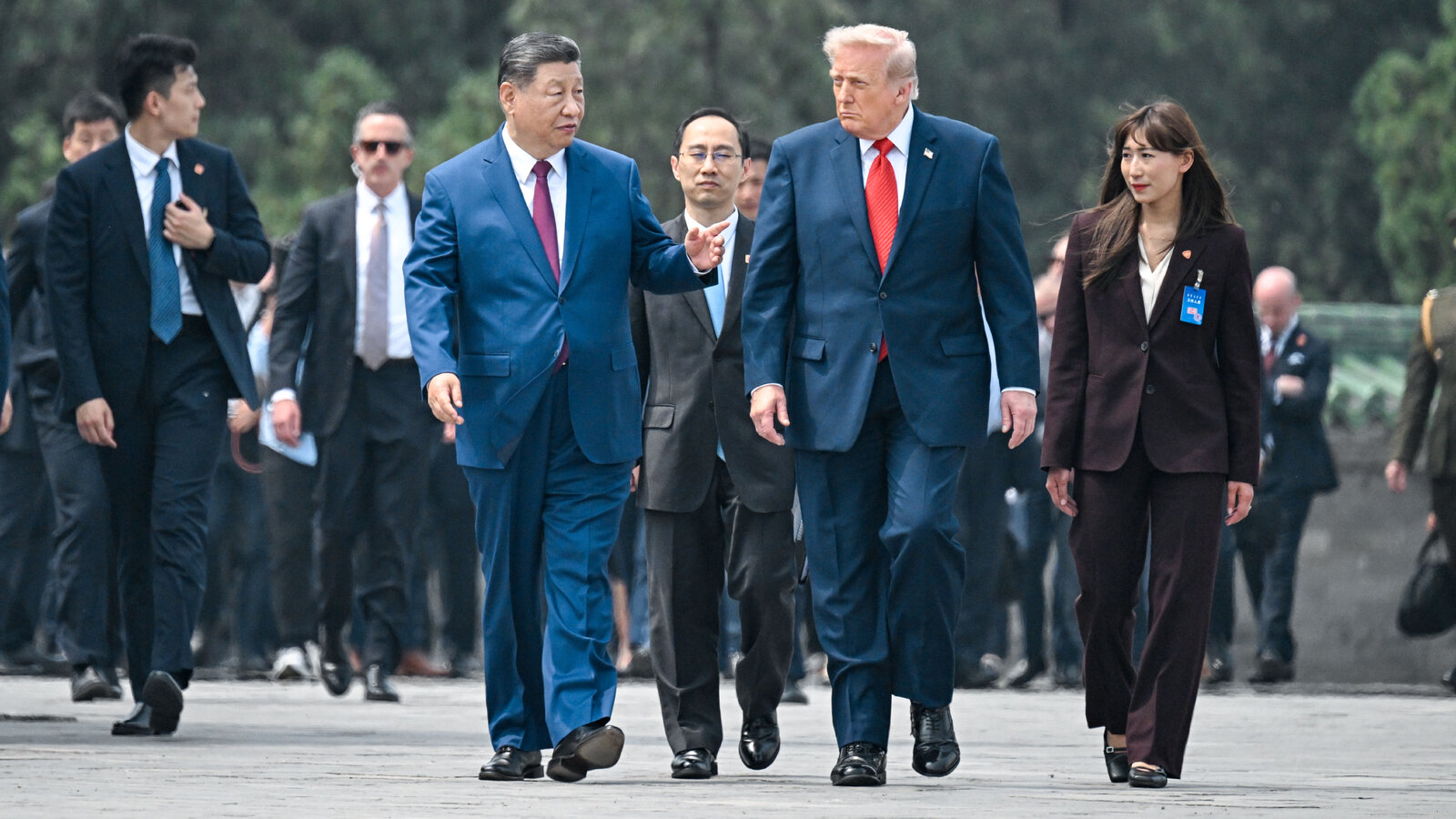
Did Trump Receive a Similar Welcome in China?
Formal protocol is given considerable importance in Chinese diplomacy. Experts and diplomats note that diplomatic status, ceremonial respect and the concept of “mianzi,” or preserving dignity and face, play an important role in China’s state system.
Reports have suggested that the planned reception for Xi at Andrews is also connected to the reception Trump received during his visit to China earlier this year.
Trump visited Beijing from May 13 to 15. It was his first visit to China since returning to the White House. After Air Force One landed at Beijing Capital International Airport, the Chinese leadership arranged a special reception for Trump.
China sent Vice President Han Zheng to welcome Trump at the airport, accompanied by senior foreign-policy officials and ambassadors. Reports described this as a notable protocol change compared with Trump’s 2017 visit.
The reception included a military band, an armed forces honor guard, a red carpet and hundreds of young people holding U.S. and Chinese flags.
Trump was also accompanied by influential business representatives, including Tesla and SpaceX chief Elon Musk and Nvidia CEO Jensen Huang, highlighting the importance of economic relations and artificial intelligence technology between the two countries.
Chinese diplomacy places importance on maintaining a balance of ceremonial status between the leaders of the two countries. U.S. officials also believe that visibly presenting Xi as a leader of equal stature to the U.S. president is important to Beijing.
Trump’s personal presence at Andrews could therefore be interpreted, on one hand, as a reciprocal gesture for the reception given to him in Beijing, and on the other as a diplomatic effort to create a positive atmosphere ahead of difficult economic and geopolitical discussions at the White House.
Why Is the Trump-Xi Meeting Important?
Although the airport reception has attracted attention, the main issues surrounding the upcoming meeting are much broader. Trump and Xi are set to meet amid regional conflicts, disruptions to energy supplies and new legislation in Washington.
A few days before Xi’s visit, the U.S. Congress passed the Lindsey O. Graham Sanctioning Russia and Iran Act of 2026, according to reports.
The legislation could give Trump authority to consider imposing tariffs of up to 100% on goods from major buyers of Russian crude oil and natural gas. China and India are reportedly among the countries that could be affected.
Chinese Foreign Ministry spokesperson Guo Jiakun criticized the measure, saying Beijing opposes unilateral sanctions and “long-arm jurisdiction” without authorization from the United Nations Security Council.
Beijing’s position is that normal commercial relations should not be controlled through pressure or tariff threats from a third country.
Meanwhile, the escalating conflict involving the United States, Israel and Iran has also created pressure on global energy markets, according to reports. Military activity in the Persian Gulf has disrupted maritime traffic through the Strait of Hormuz, while crude oil prices have reportedly risen above $100 per barrel.
Chinese Foreign Minister Wang Yi also recently met Iranian Foreign Minister Abbas Araghchi in Beijing. During the meeting, China expressed support for strengthening dialogue and protecting Iran’s legitimate rights and interests.
Washington wants to use China’s significant economic influence as a major buyer of Iranian oil to encourage Tehran to reopen maritime routes and reduce military tensions.
U.S. restrictions on exports of advanced artificial intelligence chips and semiconductor manufacturing equipment could also become an important issue in the talks. Beijing views such restrictions as an effort to hinder the development of its high-tech sector, while Washington argues that advanced AI technologies have both military and civilian applications.
The Taiwan Issue Will Also Be on the Agenda
Tensions surrounding the Taiwan Strait could also become one of the key issues at the Trump-Xi meeting. Xi Jinping has repeatedly warned Washington over U.S. arms supplies to Taiwan.
Taiwanese President Lai Ching-te, meanwhile, has said that Taipei’s security relationship with Washington remains “solid.” As a result, regional security and defense policy could occupy an important place in discussions at the Oval Office.
What Issues Could Come Up at the Trump-Xi Meeting?
The direct engagement between the two heads of state indicates that both sides do not want U.S.-China relations to move toward uncontrolled conflict, according to experts cited in reports.
Potential U.S. Objectives
- Securing Chinese cooperation or support to stabilize energy transportation routes in West Asia.
- Discussing long-standing U.S. concerns over industrial overcapacity and exports.
- Seeking commitments from Chinese manufacturers to stop the export of chemicals used in the production of illicit synthetic opioids, particularly fentanyl.
- Strengthening military communication and hotlines between the two countries to prevent accidents or misunderstandings in the South China Sea and Taiwan Strait.
Potential Chinese Objectives
- Addressing the risk of U.S. tariffs of up to 100% linked to imports of energy from Russia and Iran.
- Seeking a relaxation of, or specific exemptions from, U.S. export restrictions on AI hardware and advanced semiconductor technology.
- Reaffirming the United States’ commitment to its “One China” policy and seeking restrictions on arms sales to Taiwan.
- Securing visible recognition of Xi’s high-level diplomatic status from the U.S. president.
Experts say that during periods of intense economic tensions, the personal relationship between Trump and Xi has previously served as a channel for managing tensions between the two countries.
Trump’s possible presence to welcome Xi at Joint Base Andrews on September 23 is therefore not merely a ceremonial reception; it could also serve as an important symbolic step in creating the diplomatic environment for the upcoming high-level U.S.-China talks.
Based on collected information and various international reports
Washington, United States | September 18, 2026 | The Global Journal
Chinese President Xi Jinping will arrive in Washington on September 23 for a visit to the United States. U.S. President Donald Trump is expected to personally welcome the Chinese president at Joint Base Andrews, an unusually high-profile diplomatic reception for a U.S. president. A U.S. official confirmed the matter to AFP.
Xi’s aircraft is scheduled to land at Joint Base Andrews at around 4 p.m. local time on September 23. Trump and Xi will then hold talks at the White House on September 24. This will be the second meeting between the two leaders this year and the first visit by a Chinese president to the White House in more than a decade.
Why Trump’s Airport Welcome Matters
Foreign heads of state arriving in the United States are generally welcomed at airports by the U.S. Chief of Protocol, military officials, the ambassador of the visiting country or other senior administration officials. A U.S. president does not normally go to the airport to welcome a foreign leader.
AFP reported that Trump will personally attend Xi’s arrival ceremony. The South China Morning Post also reported that this would be the first time during Trump’s second term that he has personally welcomed a foreign head of state at an airport.
However, the reception should not be described as a direct replica of the reception Trump received in China. During Trump’s visit to Beijing in May this year, Xi himself did not welcome Trump on the airport runway. Instead, Chinese Vice President Han Zheng and other senior officials were present. A formal state reception centered on Xi was held the following day at the Great Hall of the People.
Trump-Xi Meeting at the White House on September 24
At their September 24 meeting at the White House, Trump and Xi could discuss a range of major issues, including trade, tariffs, Taiwan, Iran, artificial intelligence, critical minerals and the supply of chemicals used to produce fentanyl.
According to a Reuters analysis, reducing existing commercial tensions between the two countries and maintaining the current tariff arrangement could be among the main issues under discussion. Exports of critical minerals and rare-earth elements from China, as well as U.S. technology restrictions, could also feature prominently.
A state dinner in Xi’s honor is also scheduled at the White House on September 24.
Major Bargaining Over Trade and Tariffs
Trade relations between the United States and China remain a major area of negotiation. The existing tariff arrangement between the two countries is expected to expire in early November. Washington and Beijing could therefore discuss extending the agreement or creating a new framework.
The United States could seek increased Chinese purchases of American goods, easier exports of critical minerals and measures to address U.S. concerns over industrial overcapacity. Beijing, meanwhile, could raise the issue of reducing U.S. technology restrictions and tariffs on Chinese products.
AI and Technology Controls
Artificial intelligence could be one of the key issues in the discussions between the two leaders. Trump has previously said publicly that AI would be discussed during his meeting with Xi.
Beijing views U.S. export controls on advanced AI chips and semiconductor technology as pressure on its technology sector. Washington, meanwhile, has emphasized the potential military and national-security applications of advanced AI technology.
Meanwhile, U.S. and Chinese security experts have proposed safeguards similar to those used in nuclear arms control and direct communication mechanisms between the two countries to reduce risks associated with military use of AI. However, neither government has formally adopted these recommendations.
Strategic Tensions Over Taiwan
Taiwan remains one of the most sensitive issues in U.S.-China relations. The two countries have long-standing differences over U.S. arms sales to Taiwan and Chinese military activity around the Taiwan Strait.
Ahead of Xi’s visit, Taiwan conducted joint military exercises featuring, for the first time, coordinated use of attack drones and conventional weapons.
As a result, stability in the Taiwan Strait, arms sales and military communication could become important topics in the Trump-Xi meeting.
Iran and the Middle East Could Also Be Discussed
The conflict in the Middle East could also come up during the U.S.-China meeting. China’s economic relationship with Iran and Washington’s sanctions policy have become linked to the broader geopolitical relationship between the two countries.
A recent Reuters report also identified the impact of the Iran war as one of the potential issues in the Trump-Xi discussions.
Chinese Foreign Minister Wang Yi recently discussed high-level communication with U.S. Secretary of State Marco Rubio by phone. Wang emphasized diplomatic communication based on equality, mutual respect and reciprocity. The Middle East situation and reopening the Strait of Hormuz were also discussed.
Major Chinese Business Delegation May Accompany Xi
A delegation of senior executives from major Chinese companies could also join Xi during his U.S. visit, Reuters reported. Potential participants reportedly include executives from BYD, CATL, Xiaomi, Gotion, Hisense, Wanxiang Group, Bank of China and COFCO Group.
However, the final list of delegates has not yet been determined.
The Airport Welcome Will Send a Diplomatic Message
Trump’s personal presence at Joint Base Andrews is also significant from a symbolic perspective in U.S.-China relations, as such an airport reception by a U.S. president falls outside normal diplomatic practice.
However, the reception itself does not guarantee that differences between the two countries will be resolved. Instead, difficult negotiations over trade, technology, Taiwan, Iran and security are expected to remain at the center of the Trump-Xi talks.
The most important part of Xi’s visit, which will begin with Trump’s possible welcome at Andrews on September 23, will be the White House meeting on September 24. The outcome of the talks could have implications not only for U.S.-China trade and technology relations but also for broader international diplomacy.
With agency reports