
President Donald Trump Welcomes Chinese President Xi Jinping to the United States with an Unprecedented Reception at the Airport
Washington, United States | September 24, 2026 | The Global Journal
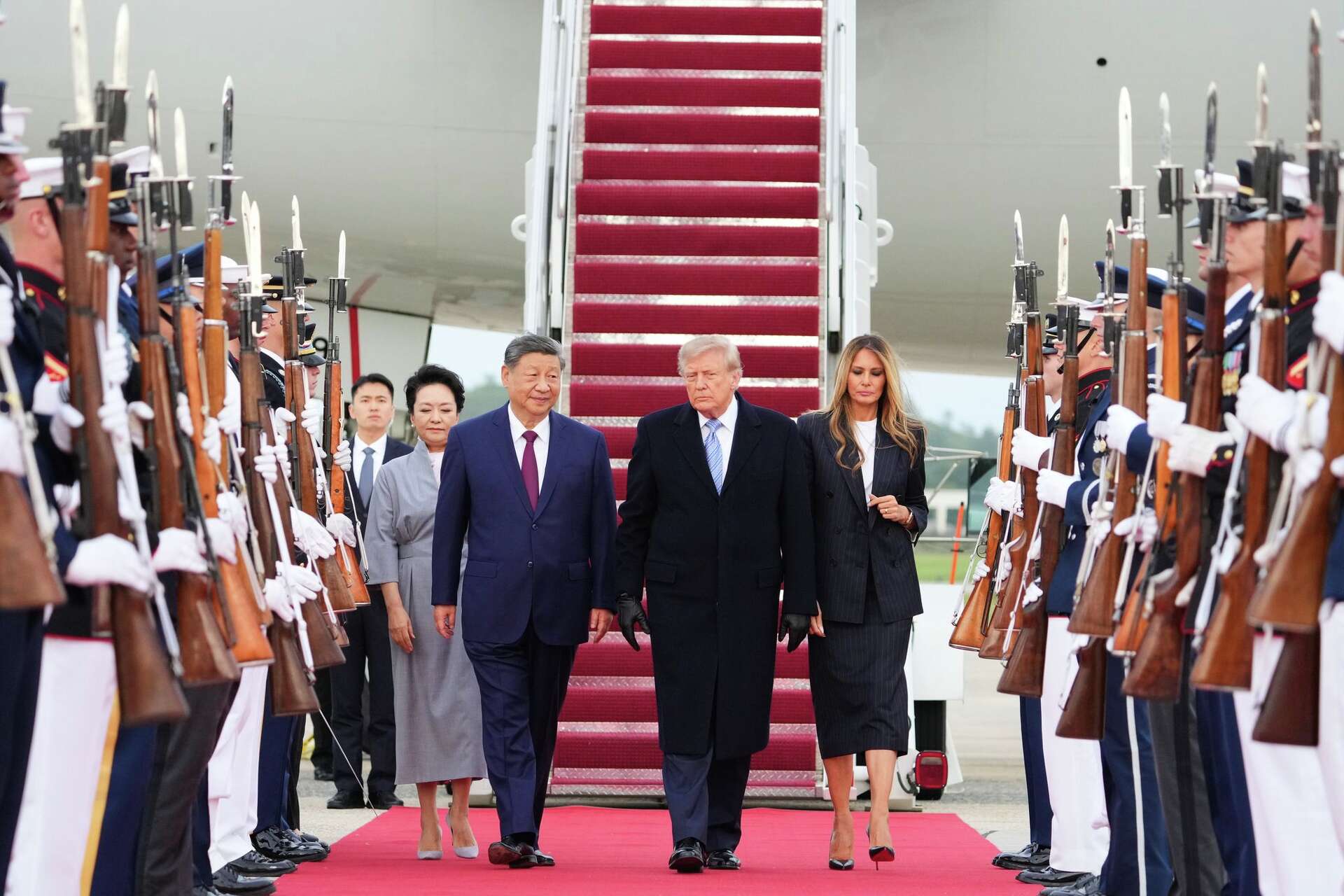
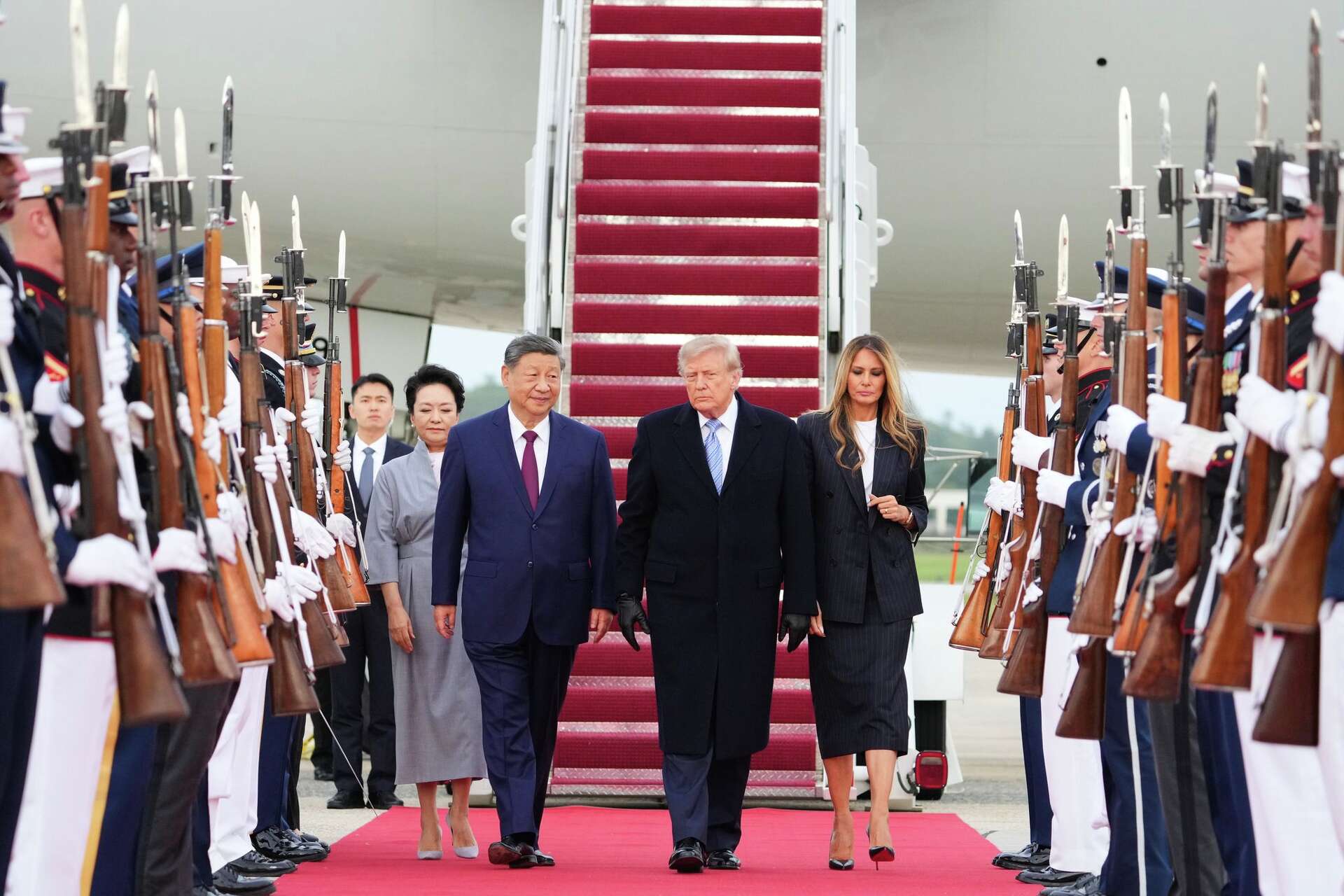
US President Donald Trump personally welcomed Chinese President Xi Jinping at Joint Base Andrews in Maryland at the start of Xi’s visit to the United States. To mark the beginning of the three-day state visit, Xi was given a grand reception featuring a 100-foot (approximately 30-meter) red carpet, an honor guard, a military band, a ceremonial cannon salute and a flyover by two B-1 bombers.
Xi Jinping arrived at Joint Base Andrews aboard a special Air China flight at around 5:40 p.m. local time on September 23. Trump and First Lady Melania Trump walked to the aircraft to welcome Xi and his wife, Peng Liyuan. The two couples shook hands, briefly spoke and walked together along the red carpet. The national anthems of the United States and China were later played as the military ceremony continued.
First Washington Visit Since 2015
According to China’s Foreign Ministry, Xi Jinping’s US visit will take place from September 23 to 25. It is his first visit to Washington since 2015 and his second reciprocal state visit with Trump within six months. During the visit, the two leaders are expected to discuss bilateral relations and a range of global issues.
Trade Truce Agreement Extended by Two More Months
Ahead of Xi’s visit, Washington and Beijing agreed to extend their trade truce by another two months, until January 10, according to US Treasury Secretary Scott Bessent. The previous agreement had been scheduled to expire in early November.
During a meeting between Bessent and Chinese Vice Premier He Lifeng, the two sides also discussed the possibility of reaching a broader future trade agreement.
‘Should Be Partners, Not Rivals’ — Xi
In a written statement released after arriving in the United States, Xi Jinping said that China and the United States should be “partners rather than rivals.” He emphasized the interdependence of the two countries’ interests and called for bilateral relations to move toward greater cooperation and stability.
Xi also said that China’s “great rejuvenation” and Trump’s goal of “making America great again” could coexist.
AI, Taiwan, Iran War and Trade Among Key Issues
The three-day visit is expected to address a number of sensitive issues, including artificial intelligence (AI), trade, rare earth minerals, Taiwan and the Iran war. Both countries are competing for leadership in AI technology, while rare-earth supplies and tariff policies remain important issues in bilateral trade relations.
Taiwan is also expected to feature in the talks. Reuters reported that Xi may urge Trump to limit or halt US arms sales to Taiwan.
Rare Airport Welcome
Trump’s personal appearance at Joint Base Andrews to welcome Xi is considered unusual compared with traditional US presidential protocol. Historically, US presidents have generally welcomed foreign leaders at the White House. According to the Associated Press, President John F. Kennedy welcomed British Prime Minister Harold Macmillan at Andrews in 1962; excluding papal visits, such personal airport welcomes by a US president have been extremely rare.
State Dinner and Further Events
A state dinner is scheduled to be held at the White House on the second day of Xi’s visit, with executives from leading US technology and business companies expected to attend. Cultural events have also been planned for Xi and Peng Liyuan.
On the final day of the visit, the two presidents and their wives are scheduled to visit the National Archives, according to reports.
Xi Jinping’s three-day state visit comes at a time when the world’s two largest economies continue to face disagreements over trade, technology, security and geopolitical issues. At the same time, the recent agreement to extend the trade truce provides another opportunity for dialogue between Washington and Beijing.