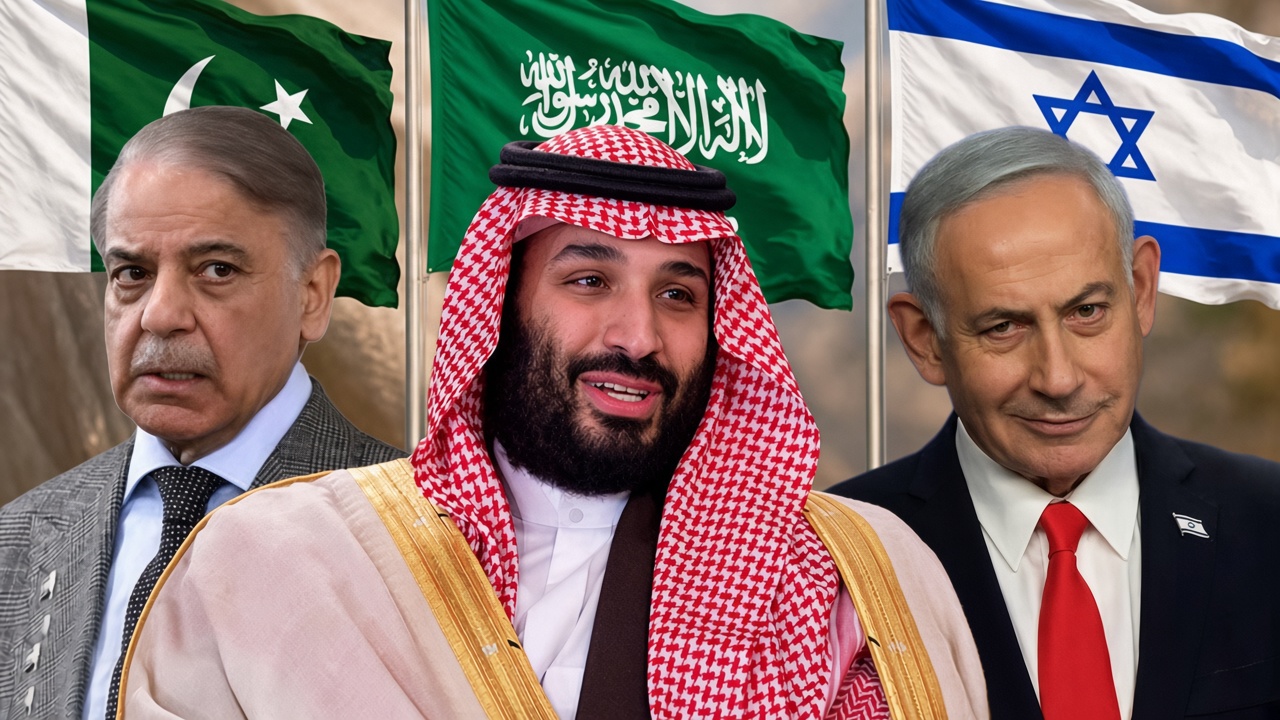

Saudi Arabia Signs Defense Pact with Pakistan and Türkiye with Much Fanfare, Yet Turns to Israel for Help Against the Houthis
Riyadh | September 19, 2026 | The Global Journal
Recent missile and drone attacks by Yemen’s Houthi forces on Saudi Arabia have raised new questions about the security equation in the Middle East. Just a month after Riyadh signed a joint defense agreement with Pakistan and Türkiye, the question of immediate military assistance to Saudi Arabia in the face of Houthi attacks remains unclear. Meanwhile, The Jerusalem Post has reported that Saudi Arabia and Israel have discussed intelligence cooperation to counter the Houthis, with mediation by the United States Central Command (CENTCOM).
On August 7, Saudi Arabia, Pakistan and Türkiye signed the Mecca Joint Defence Agreement in Mecca. Under the agreement, an armed attack against any one of the three countries is to be regarded as an attack against all three. The agreement also calls for greater defense cooperation and enhanced collective deterrence capabilities. On August 31, the three countries decided to establish a permanent secretariat to give the cooperation a more institutional framework.
However, as Houthi attacks intensified in early September, questions emerged over how the agreement would work in practice. Pakistan’s Foreign Ministry said on September 10 that no immediate military action under the agreement had been discussed following the Houthi attacks on Saudi Arabia. Islamabad, however, reaffirmed its commitment to the agreement.
Houthi Advances Increase Pressure on Riyadh
In recent weeks, the Houthis have strengthened their position along Yemen’s Red Sea coast. On September 11, reports emerged that the group had taken control of the strategically important Perim Island. They had earlier taken control of the port of Mocha. Located in the middle of the Bab el-Mandeb Strait, Perim Island holds considerable strategic importance for Red Sea security and international maritime trade.
According to recent Reuters reports, the Houthi advance has weakened Saudi-backed Yemeni forces and increased Riyadh’s security concerns over the Bab el-Mandeb. At the same time, Saudi energy infrastructure and cities have also been targeted by drones and missiles.
On September 19, air-raid warnings were issued in several areas of Saudi Arabia, including Riyadh, amid reports of possible aerial attacks. Although Saudi authorities later lifted the alert, reports indicated that explosions and smoke were seen near Riyadh.
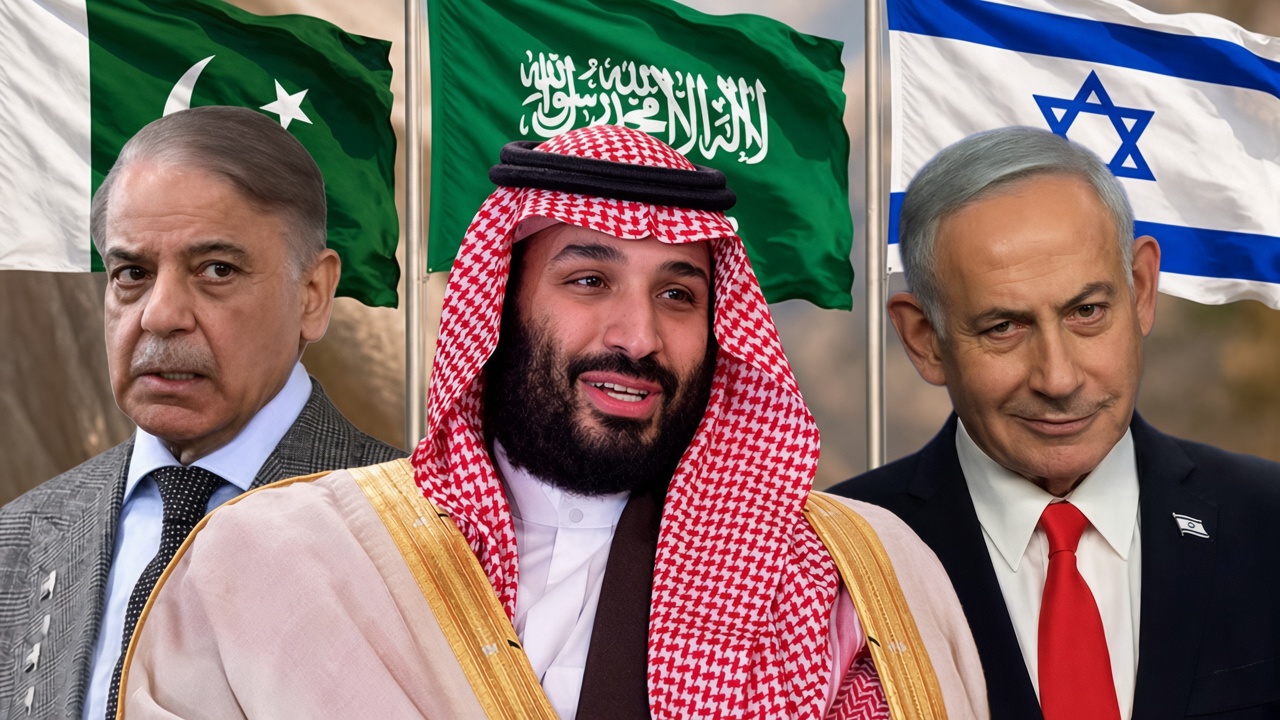
Pakistan-Türkiye Pact, but No Direct War
Some have compared the Mecca agreement with NATO’s collective-defense framework, although its practical implementation mechanisms are still developing. While the agreement seeks to strengthen collective deterrence and defense cooperation, it is not publicly clear that an attack on one member would automatically trigger direct military intervention by the other two countries.
Pakistan’s Defense Minister Khawaja Asif said on September 9 that the activation of the Mecca defense agreement could be considered if Houthi attacks continued. However, Pakistan’s Foreign Ministry said the following day that no immediate military action under the agreement had been discussed at that point.
Türkiye, meanwhile, has also maintained its commitment to defense cooperation with Saudi Arabia. However, there has been no public announcement of Turkish participation in a direct military operation against the Houthis.
As a result, while the agreement carries political and strategic significance, uncertainty remains over how it would be applied militarily in the current circumstances.
Discussions on Intelligence Cooperation with Israel
Against this backdrop, a new dimension has emerged in security cooperation between Saudi Arabia and Israel. The Jerusalem Post reported on September 15 that Saudi Arabia and Israel had discussed intelligence-sharing to counter the Houthis, with mediation by the U.S. Central Command. Citing a regional diplomat, the newspaper reported that discussions had taken place over providing Riyadh with intelligence assistance to counter potential Houthi attacks.
The development is significant because Saudi Arabia and Israel still do not have formal diplomatic relations. Rather than a direct military alliance, the current discussions appear to center on the possibility of limited cooperation involving intelligence, air defense and missile detection.
However, neither Saudi Arabia nor Israel has officially announced a new defense agreement. Therefore, the reported cooperation should not be characterized as a full-fledged military alliance.
Why Bab el-Mandeb Matters
For Saudi Arabia, Bab el-Mandeb is more than a maritime passage; it is a critical component of the international energy and trade system. The strait is strategically important for shipping between the Red Sea and the Suez Canal.
Recent Houthi advances have increased concerns over the security of the waterway. At the same time, instability around the Strait of Hormuz has increased the importance of alternative routes for Saudi Arabia and other Gulf states seeking to maintain energy exports. Any military escalation around Bab el-Mandeb could therefore affect international oil markets and maritime trade.
Reuters has reported that the Houthis’ recent advances have increased their influence around Bab el-Mandeb, creating additional risks for Saudi oil exports and regional security.
A New Possibility in Saudi-Israeli Relations?
Houthi attacks have already prompted discussion over the possibility of discreet security cooperation between Saudi Arabia and Israel. A September 16 analysis by The Jerusalem Post said the Houthi threat could bring the two countries closer in terms of security cooperation.
However, this does not mean that Saudi Arabia is immediately moving toward recognizing Israel as a state. The Palestinian issue remains one of the key factors shaping Saudi-Israeli relations. Security cooperation and full diplomatic relations should therefore be viewed as two separate issues.
At the same time, Saudi Arabia is strengthening its defense framework with Pakistan and Türkiye while maintaining security ties with the United States and other countries. Riyadh’s current approach can therefore also be viewed as an effort to manage relationships with multiple security partners rather than relying on a single country.
The Questions Ahead
The Houthis’ recent military advances have raised several questions for Saudi Arabia. How quickly will the Mecca defense agreement translate into practical military cooperation? What form of assistance might Pakistan and Türkiye provide? And how far could potential intelligence cooperation between Saudi Arabia and Israel go? These questions are now at the center of regional attention.
Meanwhile, the September 19 air-raid alert in Riyadh and recent attacks targeting energy infrastructure have further highlighted the seriousness of the situation.
Based on publicly available information, there are reports of discussions between Saudi Arabia and Israel over intelligence cooperation. However, there has been no announcement of a comprehensive Saudi-Israeli defense agreement or formal military alliance. Likewise, although the Mecca defense agreement remains in force, direct military intervention by Pakistan or Türkiye has yet to be determined.
The evolving regional security equation therefore involves three parallel tracks for Saudi Arabia: a collective defense framework with Pakistan and Türkiye, security coordination with the United States, and potential limited intelligence cooperation with Israel. The Houthis’ next moves may ultimately determine how these emerging security arrangements function in practice.