
Poland Faces Deepening Political Crisis as Dispute Over Constitutional Tribunal Sparks Clashes Between Protesters and Police
Warsaw, Poland | October 31, 2026 | The Global Journal
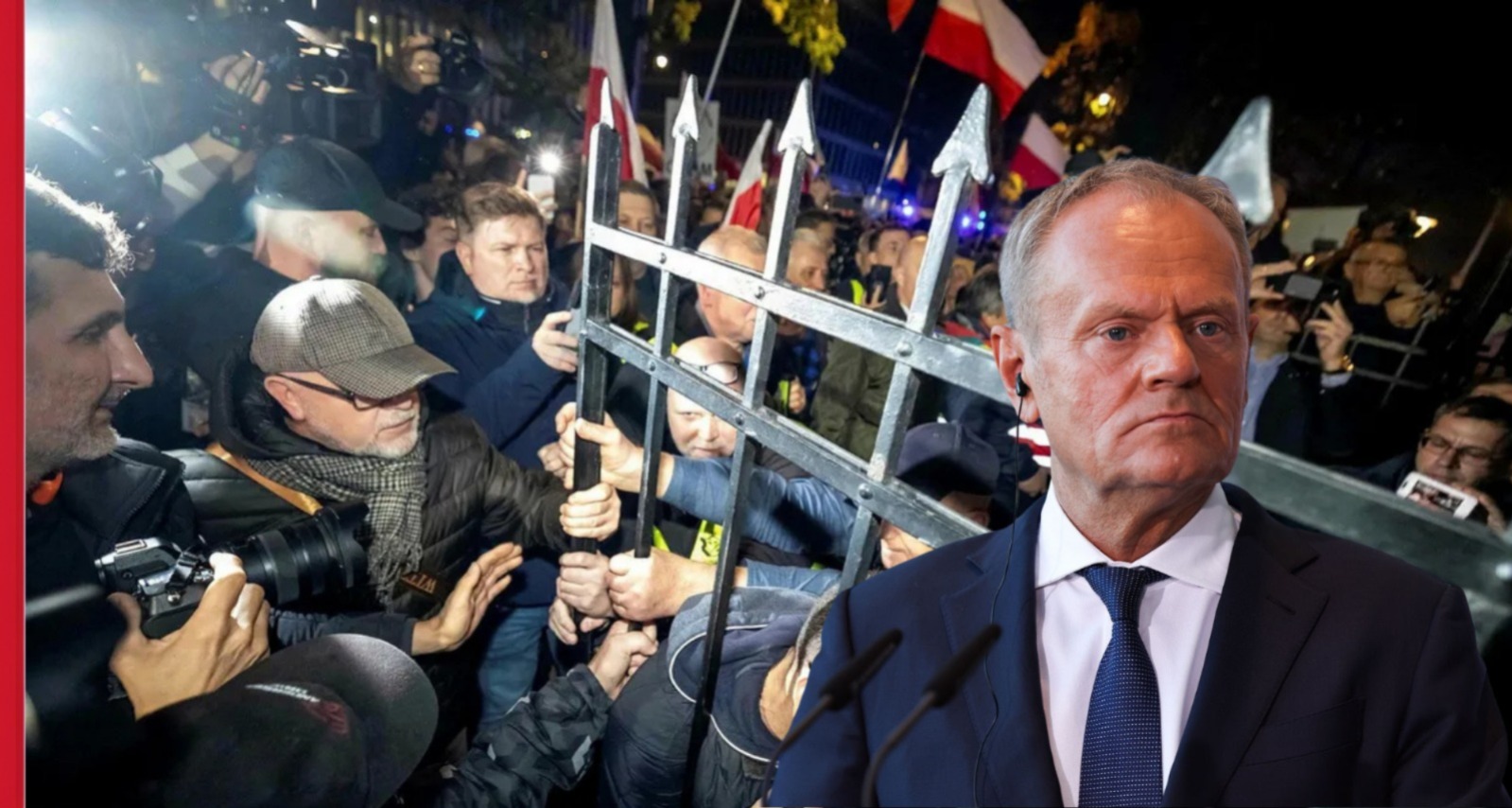
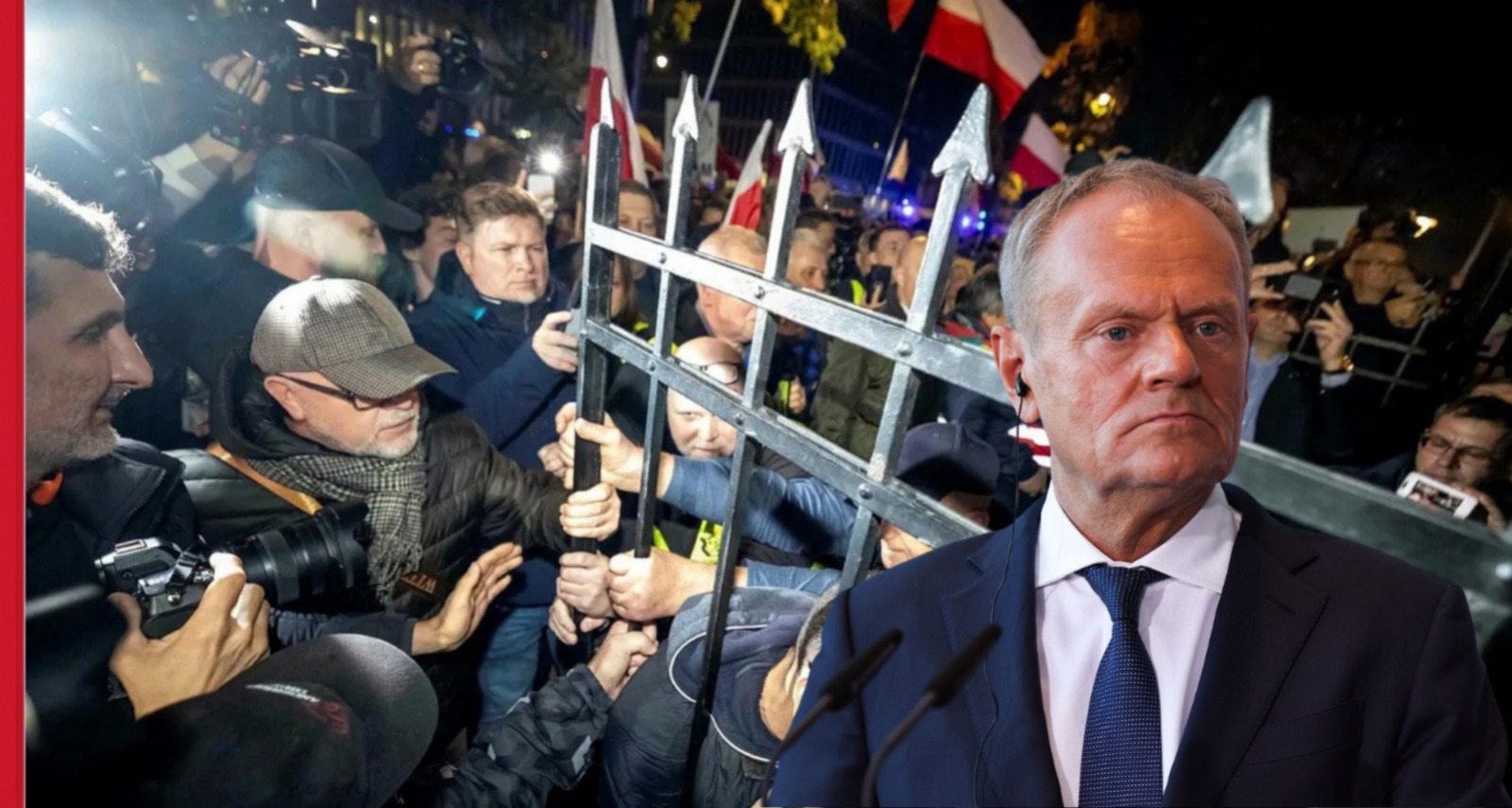
A dispute between the government led by Prime Minister Donald Tusk and opposition political forces over Poland’s Constitutional Tribunal has escalated into a serious political crisis. On Friday (October 30), protesters clashed with police outside the Constitutional Tribunal in Warsaw. Three people were detained over alleged attempts to breach the court’s security perimeter and throwing objects at police officers.
According to a report by the Associated Press (AP), dozens of people gathered outside the court to protest the government’s actions against its senior officials. The situation became tense when some protesters allegedly attempted to enter the court premises. Riot police were deployed to restore order.
The clashes have further deepened Poland’s political crisis amid the Tusk government’s efforts to reform the judiciary and its longstanding dispute with the former ruling right-wing Law and Justice (PiS) party.
Move to Lift Immunity of Two Senior Tribunal Officials
Polish Justice Minister Waldemar Żurek has confirmed that he requested the lifting of the immunity of Constitutional Tribunal President Bogdan Święczkowski and Vice-President Bartłomiej Sochański. The move is intended to initiate legal proceedings that could lead to criminal charges against them.
The Tusk government argues that action is necessary to restore judicial independence and the rule of law, including addressing what it considers controversial judicial appointments and the functioning of the tribunal. PiS supporters, however, accuse the government of interfering with judicial independence and the constitutional framework.
Police reinforced security around the court and deployed riot officers to prevent protesters from entering the building.
President Nawrocki Cuts Short Senegal Visit and Returns Home
Polish President Karol Nawrocki was on a visit to Senegal when the situation unfolded. After being informed of the developments, he announced that he would shorten his trip and return to Poland.
In a post on X, he wrote: “At a moment like this, the President must be in Poland. I am shortening my visit to Senegal. I am returning home.”
After returning, Nawrocki reportedly had a heated exchange with several judges near the entrance to the Constitutional Tribunal. Addressing individuals involved in cutting the chain on the court’s gate to gain entry, he was heard saying: “You are not judges of the Constitutional Tribunal!”
Conflicting Claims Over the Legitimacy of the Judges
In a statement published on social media, the Constitutional Tribunal said that the two judges facing potential criminal proceedings were lawfully appointed senior judges. The court further claimed that those involved in the government’s actions were committing the “crime of a coup d’état.”
Prime Minister Tusk, meanwhile, said restoring the rule of law was his government’s responsibility. In a social media post, he argued that reversing the deterioration of the rule of law under PiS rule was a difficult and sometimes painful process, but that taking necessary action was unavoidable.
Judicial Dispute Dates Back to PiS Government in 2015
The roots of Poland’s current judicial crisis can be traced to measures introduced after the PiS party came to power in 2015. At the time, the party moved to expand its influence and establish a majority within the Constitutional Tribunal through judicial appointments.
The Constitutional Tribunal reviews whether the country’s laws and government decisions comply with the constitution. Disputes over judicial appointments and the independence of the institution therefore have significant implications for Poland’s political and constitutional system.
The European Court of Human Rights and the Court of Justice of the European Union (CJEU) previously raised objections concerning the appointment process of three judges during the PiS government. The concerns included the reappointment of judges to positions that had already been lawfully filled by the previous parliament.
Judicial Reforms Blocked by Presidential Vetoes
Although the Tusk government came to power promising to free the judiciary from political influence, it has been unable to reverse all the changes introduced under PiS rule. Several of its reform initiatives have faced obstacles because of vetoes by President Nawrocki and his predecessor, Andrzej Duda.
In addition, parliament elected five Constitutional Tribunal judges in March, but Nawrocki refused to administer their oaths of office, arguing that there were irregularities in the appointment process.
Some of Tusk’s supporters have also accused the prime minister of failing to take sufficiently decisive action to reverse the judicial changes introduced under the previous government.
Political Tensions Rise Ahead of Next Year’s Election
Poland is scheduled to hold parliamentary elections next year. Against this backdrop, some observers view the government’s tougher stance on judicial reform as an effort to strengthen its political support. The government, however, maintains that its actions are necessary to restore the rule of law.
Tribunal President Święczkowski assumed office during the PiS government. Tusk has accused him of obstructing newly elected judges from taking up their positions in the court following their selection by parliament.
Meanwhile, senior PiS leader and former Justice Minister Zbigniew Ziobro has strongly criticised the government’s actions. In a post on X on Friday evening, he described them as a “blatant, criminal attack on the constitutional order” and urged supporters to mount a strong and united resistance.
Where Is Poland’s Constitutional Crisis Heading?
Disputes over the legitimacy of judicial appointments, the move to lift judicial immunity, and opposing positions taken by the president and the government have made Poland’s political crisis increasingly complex.
The Tusk government says its actions are aimed at judicial reform and restoring the rule of law. PiS and the president’s camp, meanwhile, question the constitutional legitimacy of those measures.
The latest clashes have added another layer of tension. Decisions by the Constitutional Tribunal, the government’s next steps and the president’s position will play an important role in shaping the future of judicial independence and political stability in Poland.
Sources: Associated Press (AP); Poland’s Constitutional Tribunal; statements published on social media by Prime Minister Donald Tusk and President Karol Nawrocki.