Europe is Not in Decline, Must Strengthen Defense and Global Role – Kaja Kallas
The Global Journal | Munich, Germany | 15 February 2026
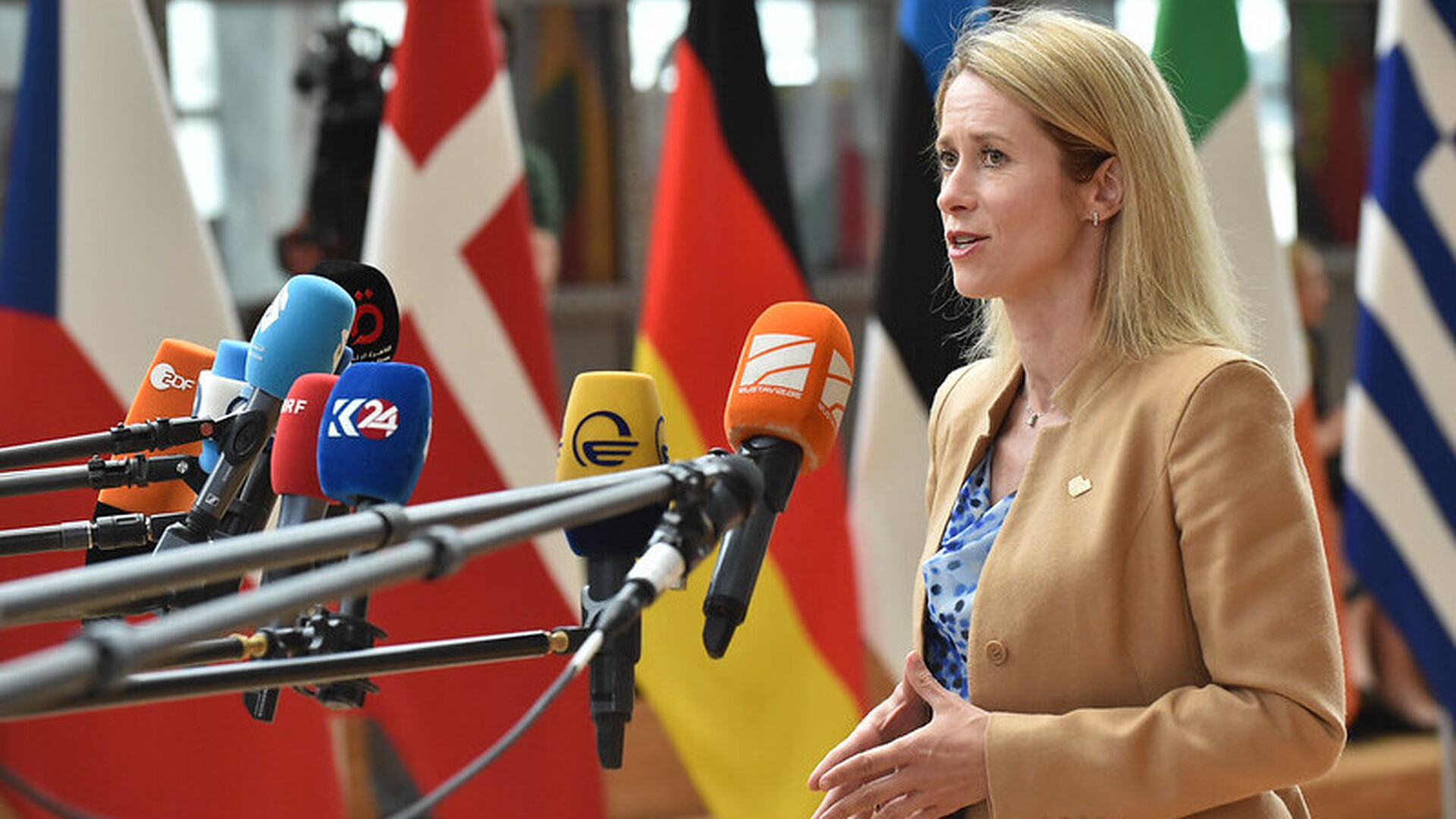
Europe is not in decline; rather, it needs to strengthen its defense and global role—this was stated by Kaja Kallas, the European Union’s Chief of Foreign Policy, on Sunday at the annual Munich Security Conference. She rejected criticisms portraying the continent as weak or on the verge of collapse.
Speaking at the panel “Europeans Assemble! Reclaiming Agency in a Rougher World,” Kallas said, “Contrary to what some say, woke decadent, Europe is not facing civilizational erasure.” She argued that global interest in the European project remains strong.
She added, “People still want to join our club, not just fellow Europeans.” Kallas further noted, “When I was in Canada last year, I was told that more than 40% of Canadians are interested in joining the European Union.”
Kallas emphasized that citizens of the 27-member bloc want their union to take a stronger role in the world, defend its values, protect its people, and advance humanity.
Regarding Russia, she said, “Russia is already attempting to cripple economies through cyberattacks, disrupt satellites, sabotage undersea cables, create fractures in alliances through disinformation, weaponize oil and gas, and, of course, there is also the nuclear threat.”
However, Kallas argued that Russia’s military performance has revealed its limits.
“After more than a decade of conflict, including four years of full-scale war in Ukraine, Russia is no longer a superpower. It has barely advanced beyond the 2014 lines, and the cost has been 1.2 million lives lost to date. Russia is broken, and its economy is in shambles.”
On potential peace agreements, Kallas stressed that any settlement must apply equally to both sides. “If Ukraine’s military is to be limited, Russia’s should be limited as well.”
She also highlighted that transatlantic relations remain crucial. “America and Europe are intertwined, have been in the past, and will be in the future,” she said, while acknowledging, “It is also clear that we do not see eye to eye on all issues.”
Latvia’s President Edgars Rinkevics pointed to Ukraine’s potential role in Europe’s future defense architecture. “If Ukraine becomes an EU member state, it would be a very real possibility, because Ukraine now possesses military capabilities that most of our countries do not have,” he said.
He highlighted tangible progress in military coordination across Europe. “Europe has made very good progress on military mobility issues, almost like creating a ‘military Schengen,’” he said.
However, he cautioned that creating parallel security structures could weaken existing alliances. “We, especially in Latvia, have always been very cautious not to duplicate NATO, because that is important,” he said, expressing skepticism about calls for a unified EU army. “I have always been skeptical about political slogans, but then finding completely different answers to what we understand.”